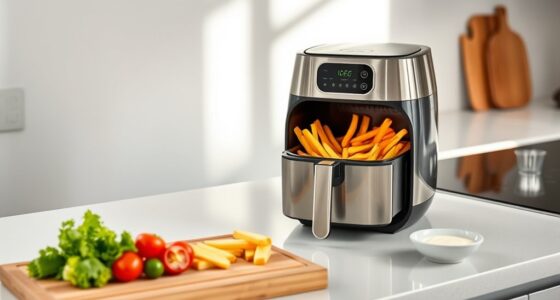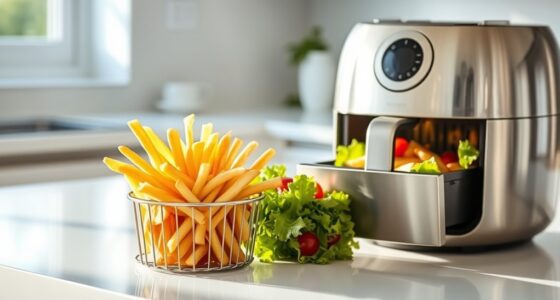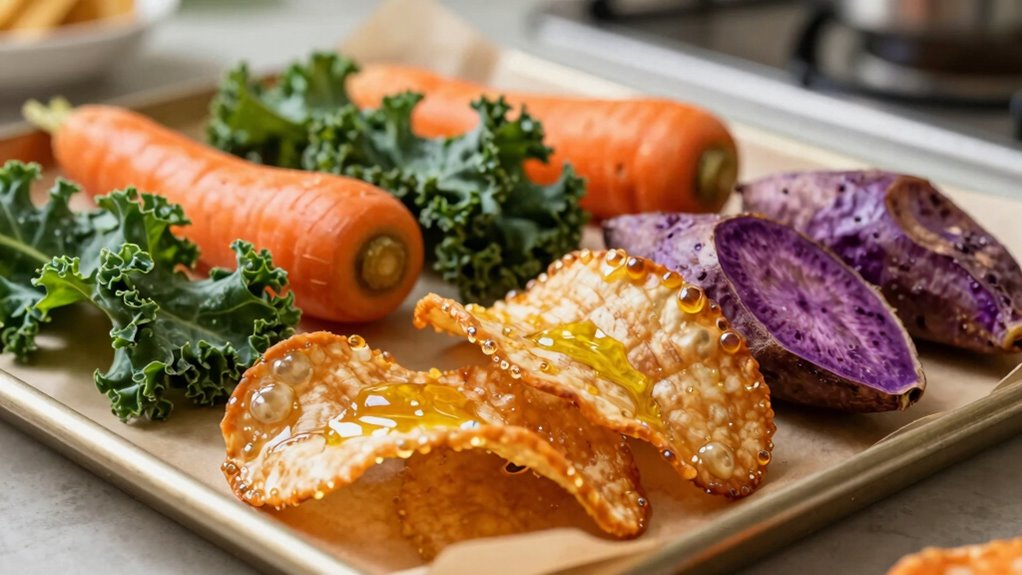
To think about healthy crisping at home, focus on techniques that maximize crunch without excess fats. Use methods like air frying, baking, or dehydration, and keep ingredients simple and uniform for even results. Employ natural seasonings and minimal oil, viewing crisping as an opportunity to enjoy flavorful textures aligned with your health goals. By prioritizing technique and mindset, you turn crispy foods into nourishing and satisfying choices—if you keep exploring, you’ll find even more tips to elevate your skills.

Get kitchen gear delivered free with Prime
- Fast, free delivery on millions of items
- Prime Video, Amazon Music and more included
- Member-only deals all year
Key Takeaways
- View crisping as an opportunity for flavorful, healthful foods, not an indulgence or guilt-driven choice.
- Use techniques like air frying, baking, or dehydration to achieve crunch with minimal added fats.
- Control moisture and temperature carefully to develop satisfying textures without over-drying or under-crisping.
- Prepare foods uniformly and avoid overcrowding to ensure even crispiness and optimal results.
- Focus on natural flavors and mindful seasoning to enhance crunch and taste without excessive salt or oil.

Crisping foods at home can be both satisfying and healthy, but it’s important to approach it with the right mindset. Instead of viewing crisping as a way to indulge, see it as an opportunity to enjoy flavorful, crunchy foods without sacrificing your health goals. The key is to explore different cooking techniques that maximize crispiness while minimizing added fats and unhealthy ingredients. One of the first things you can do is consider oil alternatives that help achieve that crispy texture without the excess calories or saturated fats. For example, baking with a light spray of cooking spray or using a small amount of broth or lemon juice can help foods crisp up nicely. Air frying has become popular for this reason, as it uses hot air circulation to produce that satisfying crunch with much less oil. Think of it as a modern twist on traditional frying, giving you the same crispiness but with a fraction of the fat.
Crisp foods healthfully using air frying, baking, or oil alternatives like broth or lemon juice.
When it comes to cooking techniques, roasting and dehydration are excellent options for healthy crisping. Roasting vegetables or proteins at high heat in the oven can develop a crispy exterior, especially if you toss them with spices or herbs that enhance flavor. Using convection ovens speeds up this process and results in evenly crisped foods. Dehydrating foods, on the other hand, removes moisture while preserving nutrients, creating a crunchy snack that’s perfect for healthy crisping without any added oils. These techniques not only help you control what goes into your food but also allow you to experiment with different textures and flavors, making your snacks more exciting and nutritious. Additionally, understanding how moisture content affects crispiness can help you better craft your snacks for optimal texture. Controlling temperature during cooking is also crucial, as it influences the rate of moisture loss and the final crunch. Incorporating techniques like temperature control can further improve the crisping process by ensuring the food reaches the ideal level of dryness or crunch. A balanced approach to cooking time can prevent over-drying or under-crisping, ensuring consistently satisfying results, and paying attention to food size ensures even cooking and crisping.
Another tip is to pay attention to your food preparation. Cutting foods into uniform pieces ensures even crisping, whether you’re roasting sweet potatoes or making kale chips. Avoid overcrowding your baking or air frying basket, as this traps steam and prevents crispiness. Instead, give the foods space to breathe, so hot air can circulate freely and produce that desirable crunch. Seasonings matter, too—using herbs, spices, or a light sprinkle of salt can boost flavor without adding calories or unhealthy fats. The focus should be on enhancing natural flavors and textures, not masking them with excessive oil or salt.
Ultimately, healthy crisping is about balancing technique, ingredients, and mindset. By exploring oil alternatives and honing your cooking techniques, you can create crispy foods that are both satisfying and nutritious. This approach helps you enjoy your favorite textures without guilt, turning healthy eating into a delightful experience rather than a compromise.
As an affiliate, we earn on qualifying purchases.
Frequently Asked Questions
Can I Use a Regular Oven for Healthy Crisping?
Yes, you can use a regular oven for healthy crisping. Focus on proper cooking techniques like even spacing and using a light coating of oil or cooking spray to enhance flavor combinations. Preheat the oven for better results and set it to a high temperature, around 400°F, to achieve that crisp texture. Keep an eye on your food to prevent burning, and experiment with seasonings for delicious flavor pairings.
What Are the Best Healthy Oils for Crisping?
For healthy crisping, you should choose oils with a high smoke point, like avocado, refined coconut, or light olive oil. These oils withstand higher temperatures without breaking down, ensuring your food crisps evenly without harmful compounds. When selecting your oil, consider its smoke point to prevent smoking and burning, which can compromise flavor and health benefits. Proper oil selection helps you achieve crispy, healthy results every time.
How Do I Prevent Food From Becoming Soggy?
To prevent food from becoming soggy, focus on texture preservation and moisture control. Always pat ingredients dry before cooking to remove excess moisture. Use a hot oven or skillet to quickly crisp the surface and avoid overcrowding, which traps steam. Consider adding a light coating of healthy oil to promote crispness. These steps help maintain the desired texture, ensuring your food stays crisp and delicious.
Is Air Frying Healthier Than Traditional Frying?
Air frying is generally healthier than traditional frying, as it uses up to 80% less oil, reducing calorie intake. You’ll appreciate how it preserves flavor enhancement and texture, making foods crispy without excess grease. Plus, the lower fat content can benefit your heart health. By choosing air frying, you enjoy delicious, crispy results while maintaining better nutritional value, making it an excellent option for healthier, flavorful meals.
How Do I Store Crispy Foods to Maintain Texture?
To maintain crispy foods’ texture, store them properly to prevent sogginess and preserve snack preservation. Use an airtight container or resealable bag, but leave a small opening for airflow to avoid moisture buildup. For longer storage, place a paper towel inside to absorb excess moisture. Reheat in an air fryer or oven to restore crispiness before eating. This method keeps your snacks crunchy and fresh longer.
Conclusion
So, if you master healthy crisping at home, you’ll discover the secret to snack perfection that’s so addictive, it’ll make your local store’s offerings look like bland, boring leftovers. Imagine transforming every veggie and chip into a mouthwatering masterpiece that could make even a picky eater drool. With a little practice, you’ll turn your kitchen into a crispy paradise, and everyone will be begging for your crispy creations. Get ready to conquer the world, one crunch at a time!
Halloween Picks
halloween
As an affiliate, we earn on qualifying purchases.