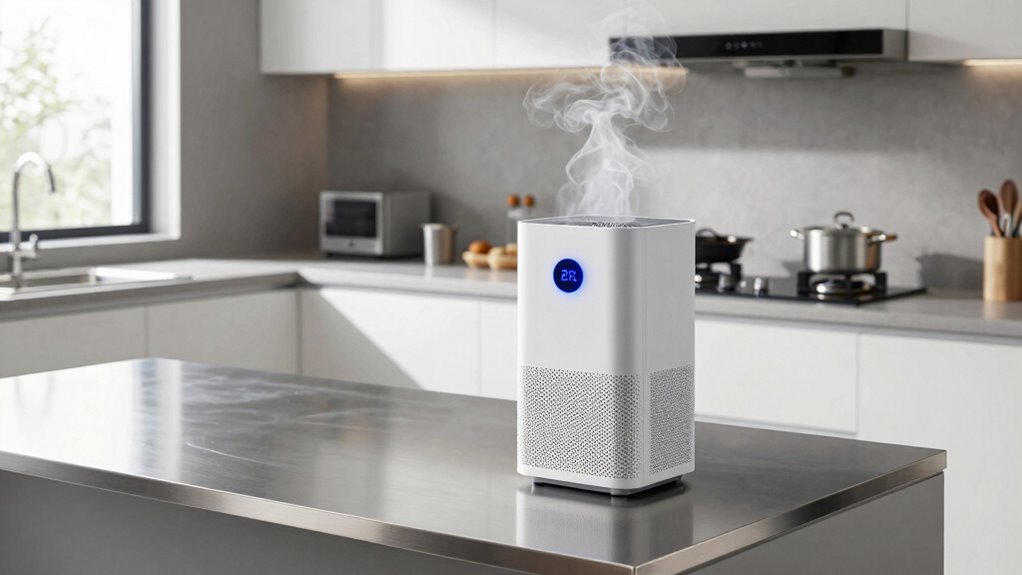

Kitchen air purifiers help reduce cooking odors and airborne particles like smoke, dust, and pollen, but they won’t completely eliminate strong fumes or grease buildup. They work best when combined with proper ventilation and regular cleaning. Filters need timely replacement to stay effective, especially if you cook often. Keep in mind, purifiers won’t remove grease from surfaces or vents, but understanding their limits can help you get the best results. If you want to learn more, keep going.

Get kitchen gear delivered free with Prime
- Fast, free delivery on millions of items
- Prime Video, Amazon Music and more included
- Member-only deals all year
Key Takeaways
- Kitchen air purifiers can effectively reduce smoke, dust, and pollen but may not fully eliminate strong cooking odors.
- They are most effective when combined with proper ventilation like range hoods or exhaust fans.
- HEPA filters need replacement every 6-12 months, and activated carbon filters every 3-6 months for optimal performance.
- Purifiers do not remove grease buildup from surfaces or vents, requiring regular cleaning.
- They help improve air quality but have limitations during heavy frying or grilling fumes.
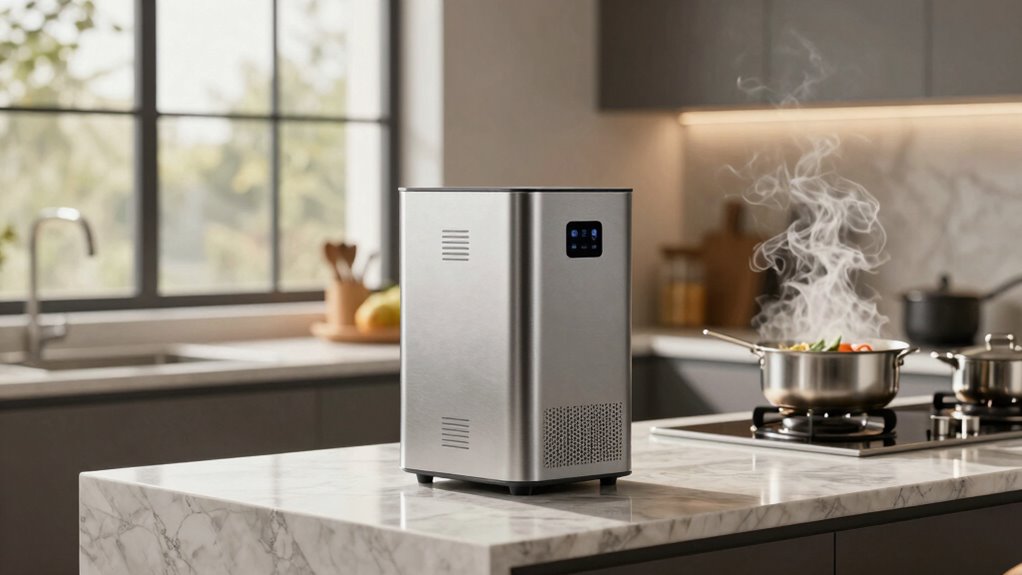
Your kitchen is the heart of your home, but it can also be a source of airborne pollutants from cooking fumes, grease, and odors. Using a kitchen air purifier can help improve indoor air quality, but understanding what it can and can’t do is key to getting the most out of it. Regular air purifier maintenance is essential, especially when it comes to filter replacement intervals. Over time, filters trap grease, smoke, and particles, but if you don’t replace them as recommended, the purifier’s efficiency drops considerably.
Generally, filter replacement intervals vary depending on the type of filter and how often you cook. For standard HEPA filters, you might need to change them every 6 to 12 months, but if you cook frequently or prepare greasy foods, more frequent replacements could be necessary. Activated carbon filters, which are excellent at absorbing odors, often require replacement every 3 to 6 months. Keeping track of these intervals ensures your purifier continues to work effectively, tackling cooking fumes and odors before they settle into your living space. Additionally, proper ventilation plays a crucial role in managing indoor air quality, especially during heavy cooking.
It’s worth noting that kitchen air purifiers are good at capturing airborne particles like smoke, dust, and pollen. They can help eliminate lingering cooking smells and reduce grease particles that float in the air. However, they aren’t magic solutions that completely eliminate all odors or grease buildup. For example, heavy frying or grilling produces strong fumes that can overwhelm the purifier temporarily. While an air purifier can substantially reduce these smells, it doesn’t replace proper ventilation, such as range hoods or exhaust fans, which actively vent fumes outside. Furthermore, airflow efficiency is vital for ensuring the purifier works optimally, especially in larger kitchens or open-plan spaces.
Another limitation is that air purifiers don’t address grease deposits on surfaces or in vents, so regular cleaning remains vital. Proper cleaning not only helps prevent grease buildup but also improves overall air quality. If you want to keep your kitchen smelling fresh, combine the use of an air purifier with routine cleaning and proper ventilation. This multi-pronged approach ensures better air quality and reduces the workload on your purifier.
kitchen air purifier for cooking odors
As an affiliate, we earn on qualifying purchases.
As an affiliate, we earn on qualifying purchases.
Frequently Asked Questions
Do Air Purifiers Remove All Types of Cooking Odors?
Air purifiers can considerably reduce many cooking odors through odor absorption and air filtration efficiency, but they don’t remove all types. Strong or greasy smells may linger if the purifier isn’t powerful enough or lacks activated carbon filters. While they improve air quality, for stubborn odors, you might need additional methods like ventilation or cleaning. So, while effective, air purifiers have their limits in completely eliminating every cooking smell.
How Often Should I Replace the Filter in My Air Purifier?
Ever wonder if your air purifier’s filter is working at its best? You should replace it every 6 to 12 months, depending on usage and filter longevity. Regular maintenance tips, like checking for debris and following manufacturer recommendations, help keep it effective. Don’t wait until odors linger—changing the filter on time ensures your kitchen stays fresh and your purifier performs efficiently.
Can Air Purifiers Eliminate Smoke From Cooking?
Yes, air purifiers can help reduce smoke from cooking, but their effectiveness depends on the filter type. Look for models with advanced smoke filtration capabilities and activated carbon filters, which trap cooking fumes and odors. Keep in mind, they won’t eliminate all smoke entirely, especially in heavily smoky situations. Regularly replacing filters is essential to maintain ideal smoke filtration, ensuring your kitchen stays fresher during and after cooking.
Are Portable Air Purifiers Effective for Large Kitchens?
Portable air purifiers can be effective for large kitchens if they match your kitchen size, but portability concerns might limit their effectiveness in bigger spaces. You’ll want a model with higher airflow and coverage capacity to handle the volume of air. Keep in mind, portable units are easier to move but may require multiple units for large kitchens to maintain clean air and effectively reduce cooking odors.
Do Air Purifiers Reduce Indoor Humidity Caused by Cooking?
Air purifiers primarily target odors and pollutants, but they don’t markedly reduce indoor humidity caused by cooking. For humidity control, you should consider a dehumidifier. However, some air purifiers with special filters can help absorb odors effectively, improving air quality. Keep in mind, to manage humidity from cooking, combining an air purifier with a dehumidifier offers the best results for a comfortable kitchen environment.
Conclusion
Kitchen air purifiers can markedly reduce cooking odors, making your space more pleasant. However, they don’t eliminate all fumes or airborne grease. Did you know that studies show indoor air can be up to five times more polluted than outdoor air? While purifiers help, good ventilation and regular cleaning are essential for a truly fresh kitchen. Invest wisely, and you’ll enjoy cleaner air and a more inviting cooking environment every day.
Fall Picks
fall essentials
As an affiliate, we earn on qualifying purchases.