
When comparing reheating and re-cooking, both can affect nutrient retention based on how carefully you handle the process. Reheating leftovers quickly at moderate temperatures helps preserve nutrients but can lead to some loss if done repeatedly or improperly. Re-cooking from raw ingredients offers more control, allowing you to maintain nutrients better with gentle methods. Ultimately, choosing the right technique and proper timing can help maximize health benefits—more details below will help you make smarter choices.
Key Takeaways
- Re-cooking from raw ingredients generally preserves nutrients better than reheating leftovers.
- Gentle reheating methods help retain nutrients by minimizing heat exposure and nutrient degradation.
- Multiple reheats can cause nutrient loss, especially for heat-sensitive vitamins.
- Proper temperature control during re-cooking ensures nutrient retention while ensuring safety.
- The choice of cooking technique influences nutrient preservation in both reheating and re-cooking processes.
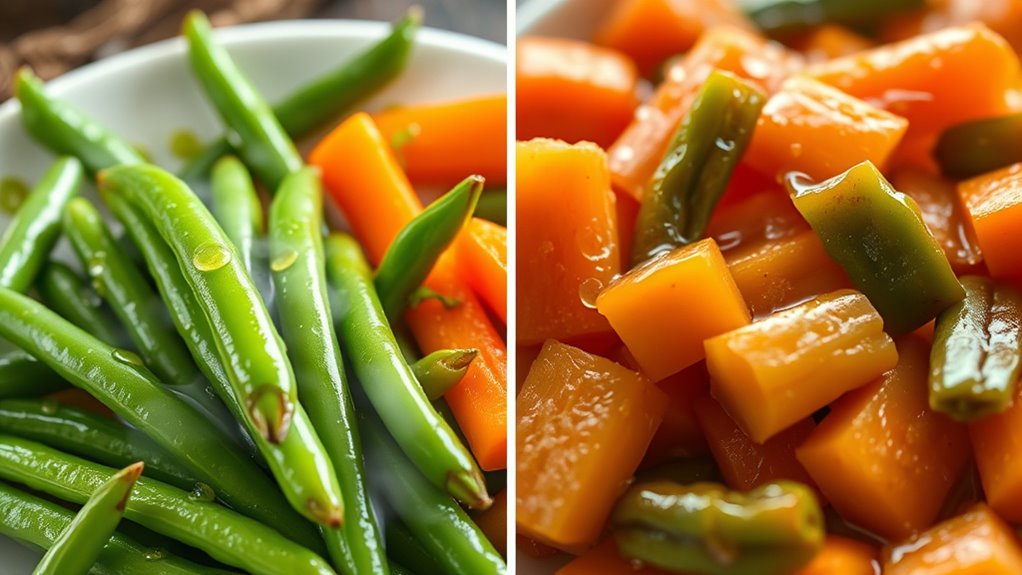
Food safety is paramount when deciding whether to reheat or re-cook. Reheating is designed to bring leftovers up to a temperature that kills bacteria, usually around 165°F (74°C). When you reheat properly, you reduce the risk of foodborne illnesses, especially with dishes containing meat, poultry, or seafood. However, if leftovers are not stored correctly or are left out too long, reheating may not fully eliminate bacteria or toxins that have formed. Re-cooking, on the other hand, often involves a more thorough process—sometimes cooking from raw or partially cooked ingredients. This can be safer if the original dish was undercooked or if you’re preparing a new meal entirely. Yet, re-cooking also poses risks if not done properly, such as cross-contamination or uneven heating, which can leave some bacteria alive. Additionally, the cooking method used during re-cooking can significantly influence the safety and nutritional quality of the food.
Flavor preservation is another critical factor. Reheating generally aims to warm food quickly, which can sometimes lead to a loss of flavor or texture, especially if the process isn’t carefully managed. For example, reheated rice or pasta can become mushy or dry if overdone or heated improperly. Re-cooking, however, gives you more control over flavor development. It allows you to adjust seasonings, add fresh ingredients, or re-balance flavors to enhance the dish. But it also has the potential to diminish original flavors if overcooked or if the dish is reheated multiple times. Consequently, for the best flavor preservation, gentle reheating methods like steaming or using low heat are recommended, and re-cooking should be done with attention to timing and temperature.

Lonicera Digital Cooking Thermometer for Bread Baking, Food and Water Temperature Measurement. Waterproof and Long Stem with Meat Temp Guide, Display with Backlit (Red)
WATERPROOF & LONG PROBE – Cooking thermometer with IPX6 rated waterproof, clean it freely under running water. Keep…
As an affiliate, we earn on qualifying purchases.
As an affiliate, we earn on qualifying purchases.
Frequently Asked Questions
How Does Reheating Affect the Flavor of Leftovers?
Reheating can impact the flavor of leftovers by causing flavor transformation, which might make some dishes taste different or less vibrant. If you reheat carefully, you can preserve the aroma and maintain much of the original flavor. Using gentle heat and avoiding overcooking helps to keep the aroma intact, ensuring your leftovers taste fresh and flavorful rather than dull or burnt. Proper reheating techniques are key to flavor retention.
Are There Specific Foods That Shouldn’T Be Reheated?
Imagine steaming a delicate fish or creamy scrambled eggs, and you’ll notice they don’t reheat well. Certain foods, like seafood, eggs, and rice, are best avoided when reheated due to food safety risks and texture changes. To prevent spoilage, follow refrigeration tips—keep leftovers cold and reheat thoroughly. If you’re unsure, it’s safer to discard these foods rather than risk foodborne illness from improper reheating.
What Are the Best Practices for Safe Reheating?
To guarantee safe reheating, follow food safety and storage guidelines closely. Always reheat leftovers to at least 165°F (74°C), stirring evenly for consistent temperature. Store leftovers promptly in airtight containers and refrigerate within two hours of cooking. Use a microwave, stove, or oven, and avoid reheating multiple times. Check for signs of spoilage before reheating, and consume leftovers within 3-4 days to prevent foodborne illnesses.
How Does Re-Cooking Impact Texture and Taste?
Re-cooking can markedly impact texture and taste, often causing texture change and taste alteration. You might notice dishes becoming softer, mushy, or even dry, depending on the method used. Re-cooking can also intensify flavors or sometimes produce a dull taste. To minimize these effects, re-cook gently and avoid overcooking, so your food retains its original texture and flavor as much as possible, ensuring a more enjoyable eating experience.
Can Repeated Reheating Degrade Nutritional Value Significantly?
Repeated reheating can cause some nutrient loss, especially if you reheat food for too long or multiple times. The longer the reheating duration, the greater the potential for nutrient degradation, particularly vitamins sensitive to heat like C and B vitamins. To minimize nutrient loss, reheat only as much as needed and avoid prolonged reheating sessions. This way, you preserve more of the food’s nutritional value while still enjoying your meal.
nutrient-preserving food reheating tools
As an affiliate, we earn on qualifying purchases.
As an affiliate, we earn on qualifying purchases.
Conclusion
Think of reheating and re-cooking like two sides of the same coin—both can be beneficial if done right. Reheating preserves nutrients if done gently, like tending to a delicate plant. Re-cooking might cause some nutrient loss, but it can also refresh flavors and textures. By paying attention to time and temperature, you can keep your meals nutritious and tasty. Remember, with careful handling, you’re the gardener of your own healthy, delicious leftovers.

STHF Steam Tray for Reheating Food, Stove Top Steamer & Reheating Pan with Removable Steaming Rack, Multi-Purpose Stainless Steel Steamer Pot for Veggies, Rice, Leftovers – Dishwasher Safe
"1. 【Gentle Steam Reheating for Perfect Leftovers Every Time】 Revive your meals without sacrificing quality. This stove top…
As an affiliate, we earn on qualifying purchases.
As an affiliate, we earn on qualifying purchases.
reheat leftovers food saver
As an affiliate, we earn on qualifying purchases.
As an affiliate, we earn on qualifying purchases.