
When air frying, choosing unsaturated fats like olive or avocado oil is healthier because they lower bad LDL cholesterol and support heart health, and they are more stable at high temperatures. Conversely, saturated fats found in butter and fatty meats can raise cholesterol levels and increase health risks. Opting for healthier fats can make your air-fried meals better for your body, and understanding the differences helps you make smarter choices—if you continue exploring, you’ll discover more ways to improve your cooking and wellness.
Key Takeaways
- Air frying reduces overall fat content by requiring less oil compared to traditional frying.
- Using oils high in unsaturated fats (like olive oil) enhances health benefits during air frying.
- Saturated fats in oils can raise LDL cholesterol, increasing heart disease risk if used excessively.
- Choosing stable, unsaturated fat-rich oils prevents harmful compounds during high-temperature air frying.
- Proper oil selection and minimal use optimize the health advantages of air-fried foods.
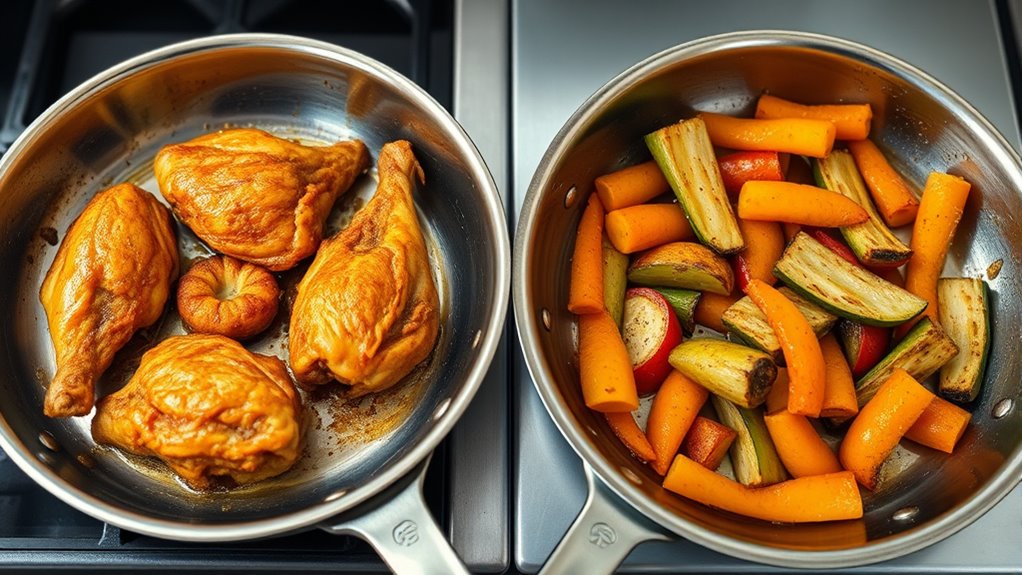
Fats are an essential part of your diet, but not all fats are created equal. When it comes to air frying, understanding the differences between saturated and unsaturated fats can considerably impact your health and how you prepare your meals. The health implications of these fats are a major consideration because they influence your cholesterol levels and heart health. Unsaturated fats, found in foods like olive oil, avocados, and nuts, are generally considered healthier. They can help lower bad LDL cholesterol and reduce your risk of cardiovascular disease. Saturated fats, on the other hand, are present in animal products like butter, cheese, and fatty meats. Consuming too much saturated fat can raise your LDL cholesterol, increasing the likelihood of heart problems over time.
When you’re air frying, the choice of cooking techniques can make a difference in how much saturated or unsaturated fat ends up in your food. Air frying uses hot air circulation to cook food with little to no added oil, which means you’re naturally reducing your intake of unhealthy fats. However, the type of oil you choose to use still matters. For instance, opting for oils high in unsaturated fats, like olive or avocado oil, can boost the health profile of your meals. These oils are more stable at high temperatures and less likely to produce harmful compounds during cooking. Conversely, using oils rich in saturated fats or trans fats can negate some of the health benefits of air frying and contribute to increased health risks.
Your cooking techniques also influence the amount of fats retained or used during preparation. For example, if you lightly spray or brush your food with healthier oils, you’re adding beneficial fats without excessive calories. On the other hand, deep frying or using large amounts of butter or cream can dramatically increase saturated fat content, even if you’re using an air fryer. To maximize health benefits, stick to cooking methods that maintain the integrity of unsaturated fats, like using minimal oil or choosing heart-healthy oils with high smoke points. Additionally, being aware of mammography guidelines helps in early detection and prevention strategies for breast health, which is another aspect of overall wellness.
Being mindful of these factors allows you to enjoy air-fried meals without compromising your health. Choose your fats wisely, prioritize unsaturated options, and employ cooking techniques that minimize unnecessary fat intake. This approach helps you enjoy the delicious, crispy textures you love while supporting your overall cardiovascular health. So, remember: the type of fat and how you cook with it are key to making your air frying both tasty and health-conscious.
Frequently Asked Questions
How Does Fat Type Affect Air Fryer Cooking Times?
You’ll notice that fat type affects air fryer cooking times because saturated fats tend to have higher melting points, which can influence oil absorption and heat transfer. Unsaturated fats, with lower melting points, allow for quicker heat transfer and may result in slightly shorter cooking times. So, choosing the right fat can optimize your air frying process, ensuring even cooking and better flavor without overexposure to heat.
Can Using Different Fats Change the Flavor of Air-Fried Foods?
Yes, using different fats can change the flavor of your air-fried foods. When you choose fats like olive oil or butter, they add unique flavor profiles and enhance the overall taste. Additionally, fats influence flavor enhancement through their absorption into the food, making it richer and more delicious. So, experimenting with various fats not only affects taste but also elevates your dish’s aroma and mouthfeel.
Are There Health Risks Associated With Repeatedly Heating Saturated Fats?
Repeatedly heating saturated fats can pose health risks. Over time, these fats become less stable and may break down into harmful compounds, increasing health implications like inflammation or clogged arteries. You might think they’re safe because they’re solid at room temperature, but their fat stability diminishes with each use. To protect your health, consider limiting how often you reuse saturated fats and opt for more stable, healthier options.
What Is the Smoke Point of Various Cooking Oils in Air Frying?
You’ll find that the smoke point of cooking oils varies, affecting oil stability and flavor retention during air frying. For example, avocado oil has a high smoke point around 520°F, making it highly stable, while olive oil’s smoke point is about 375°F, which may cause flavor loss if heated too much. Selecting oils with higher smoke points helps prevent burning, maintains flavor, and guarantees healthier, tastier results.
Does Fat Type Influence the Crispiness of Air-Fried Dishes?
Think of fat type as the secret brushstroke to your crispy masterpiece. Your choice of fat influences crispiness enhancement—saturated fats often create a crunchier exterior, while unsaturated fats add a lighter, more delicate texture. By selecting the right fat composition, you can tailor your dish’s texture to perfection. So, yes, the type of fat you use directly impacts how irresistibly crispy your air-fried creations turn out.
Conclusion
Remember, you are what you eat. When choosing fats for air frying, opt for unsaturated fats like olive oil or avocado for a healthier option. While saturated fats can add flavor and texture, moderation is key. Like the saying goes, “A little goes a long way.” By making mindful choices, you can enjoy tasty meals without compromising your health. So, choose wisely and enjoy your air-fried favorites guilt-free!