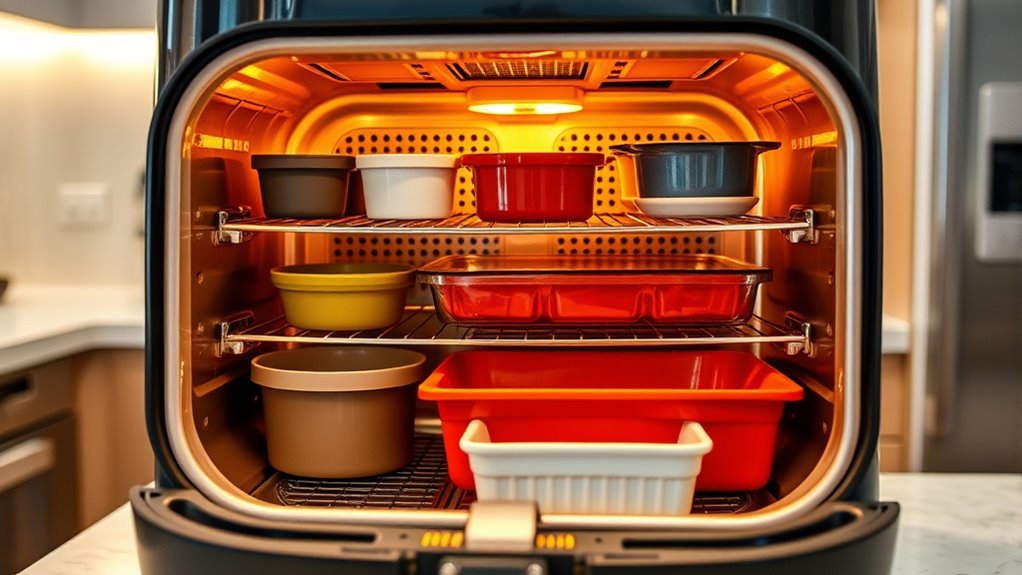

To choose the right bakeware size for your air fryer, start by measuring its interior dimensions—width, height, and depth—and leave about 1-2 inches for airflow. Opt for bakeware that’s slightly smaller than these measurements to prevent blocking air circulation and ensure even cooking. Materials like silicone, glass, or metal work best. Pay attention to handles that might reduce capacity. Keep these tips in mind, and you’ll discover more ways to maximize your baking experience.

Get kitchen gear delivered free with Prime
- Fast, free delivery on millions of items
- Prime Video, Amazon Music and more included
- Member-only deals all year
Key Takeaways
- Measure your air fryer’s interior dimensions carefully, including width, height, and depth, to select appropriately sized bakeware.
- Choose bakeware that is slightly smaller than the interior space to ensure proper air circulation and even cooking.
- Opt for low-profile, shallow pans (2-3 inches deep) to maximize airflow and avoid obstructing the fan or heating element.
- Use heat-resistant materials like silicone, glass, or metal, and prefer handle-free options for better fit and safety.
- Confirm all bakeware dimensions, including handles and rims, match your air fryer’s interior measurements before purchasing.
As an affiliate, we earn on qualifying purchases.
Understanding Your Air Fryer’s Interior Dimensions

Before buying bakeware for your air fryer, it’s important to know its interior dimensions. These measurements—width, height, and depth—determine which bakeware sizes will fit properly. Even if two models have the same air fryer capacity, their interior dimensions can differ, affecting your options. Use a ruler or tape measure to record these measurements accurately, especially for deeper or bulky pans. Keep in mind that interior dimensions are usually smaller than the total capacity listed, so verifying these is essential. Knowing your specific measurements helps you choose the largest compatible bakeware, maximizing cooking space and efficiency. By understanding your air fryer’s interior dimensions, you ensure your bakeware fits perfectly, avoiding overcrowding and uneven cooking. Additionally, considering the size of your bakeware can help prevent overcrowding, which impacts cooking results. Being aware of your air fryer’s interior space allows you to select the right bakeware that will cook evenly and efficiently, and considering precise measurements can further improve your cooking outcomes. Moreover, understanding the essential dimensions can help you plan your cooking setup more effectively. For example, knowing the height clearance can prevent selecting pans that are too tall to fit comfortably inside.
Why Size Matters When Selecting Bakeware
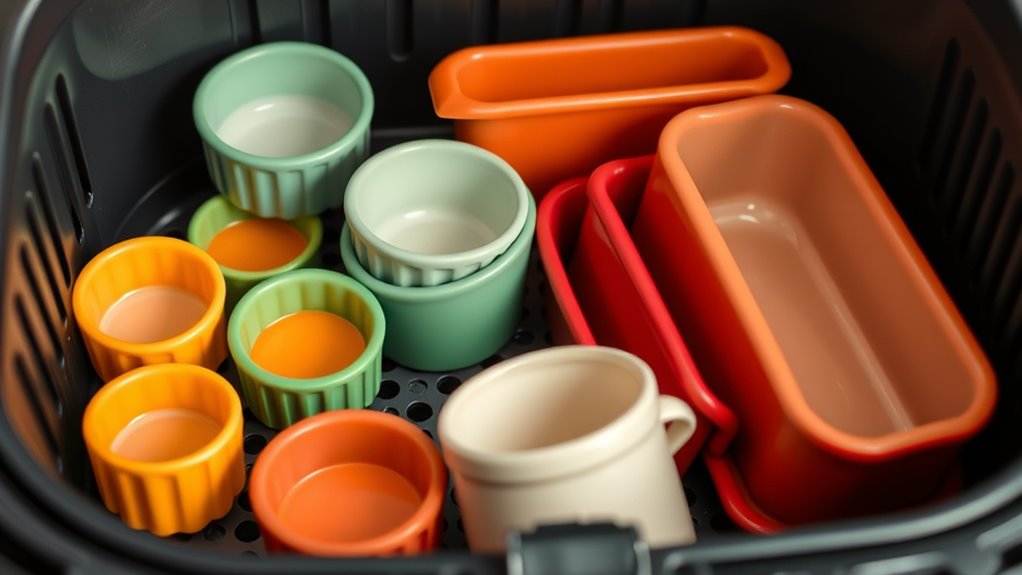
Choosing the right size bakeware is essential for achieving even cooking and maximizing your air fryer’s efficiency. When selecting bakeware sizes, verify they fit inside your air fryer’s basket without overcrowding. Oversized pans can block air circulation, leading to uneven baking results. Measure your oven dimensions, including width and height, to pick appropriately sized bakeware that fits comfortably. Handles that are too bulky may reduce available space and hinder proper fit inside the basket. Using the correct size minimizes the need for multiple batches, saving time and energy. Properly sized bakeware ensures hot air flows freely around your food, promoting even browning and consistent results. Being aware of your air fryer’s size and capacity helps you select the ideal bakeware for optimal performance. Additionally, understanding air circulation principles can improve baking outcomes and prevent overcrowding. Proper bakeware placement also plays a crucial role in ensuring optimal air flow. To further enhance your baking success, always consider the material and thickness of the bakeware, as these factors influence heat conduction and baking time. A well-chosen size also helps prevent food spillage and makes cleanup easier, contributing to a more efficient baking process. In short, paying attention to bakeware sizes helps you get the best performance out of your air fryer.
Best Materials for Air Fryer-Compatible Bakeware
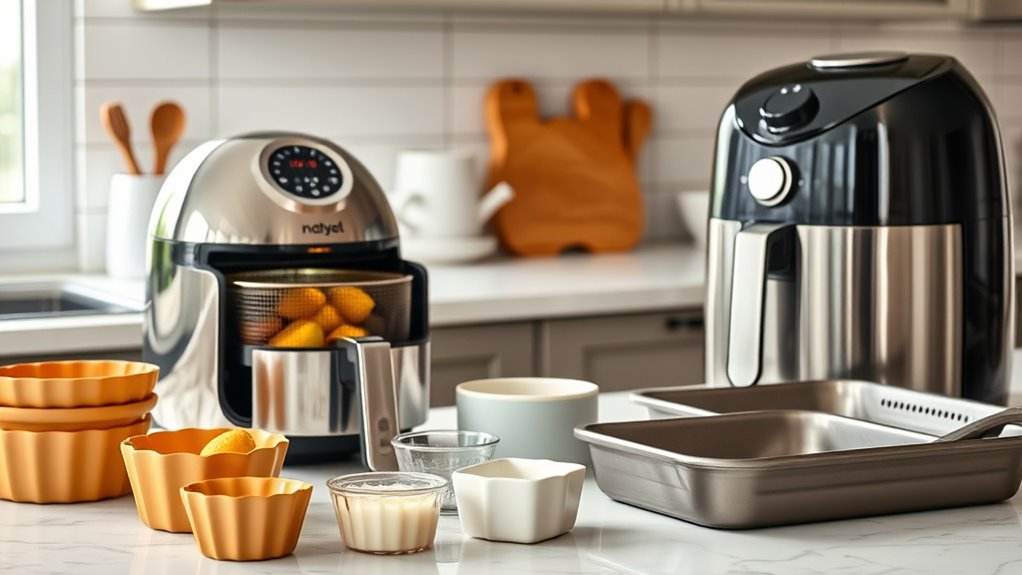
Selecting the right materials for your air fryer bakeware is essential to guarantee even heat distribution and durability. Look for bakeware materials that are air fryer safe and heat-resistant bakeware options like carbon steel, hard-anodized aluminum, glass, and ceramic. These materials conduct heat efficiently, ensuring your food cooks evenly. Glass bakeware is versatile, microwave-safe, and withstands high temperatures, making it a great choice. Silicone pans are also suitable—they’re flexible, non-stick, and heat-resistant, ideal for baking without warping. Avoid plastic or low-quality materials that can melt or release harmful chemicals under high heat and rapid air circulation. Always check that your bakeware material is labeled as “air fryer safe” and can endure your appliance’s maximum temperature to prevent damage. Recognizing angel number meanings can also help you tune into the universe’s guidance for your culinary pursuits. Additionally, choosing heat-resistant materials ensures your bakeware withstands the intense airflow and temperature fluctuations typical in air fryers. To further ensure safety, verify that the bakeware’s compliance with safety standards aligns with industry regulations for kitchenware. Properly selecting bakeware based on personal safety considerations can enhance your cooking experience and ensure peace of mind. Being aware of air fryer-specific features can also help you select the most suitable bakeware for your appliance.
How to Measure and Match Bakeware to Your Air Fryer
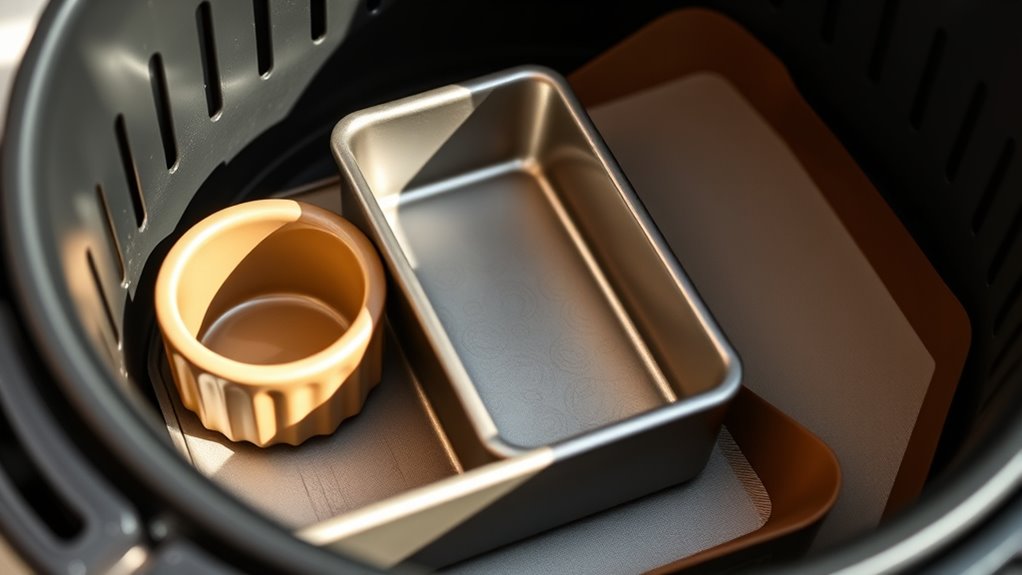
To guarantee your bakeware fits, start by measuring your air fryer’s interior dimensions—width, depth, and height. Compare those measurements with your chosen bakeware, leaving at least 1-2 inches for proper air circulation. Keep handle designs in mind and verify the bakeware’s heat rating before making a purchase. Incorporating industry trends can also help you select the most suitable bakeware options for your air fryer.
Measure Interior Dimensions Carefully
Before selecting bakeware for your air fryer, measuring the interior dimensions of your appliance accurately is essential. Use a ruler or tape measure to determine the width, height, and depth of your basket or chamber. Record these interior dimensions and compare them to the bakeware sizes you’re considering, guaranteeing a proper fit. Keep in mind that handles, rims, or lids can add to the overall size, so opt for bakeware with minimal or no handles for maximum space. Remember, different air fryer models may have varying interior dimensions, even at the same capacity, so always measure each specific appliance. To guarantee even cooking and ideal air circulation, choose bakeware that’s slightly smaller than the interior measurements. Proper measurement is key to successful baking.
Match Bakeware to Space
Accurately measuring your air fryer’s interior dimensions is the first step to choosing the right bakeware. Use a ruler or tape measure to record the width, height, and depth, ensuring you account for space needed for air circulation. Check the manufacturer’s specifications for recommended maximum dimensions and compatible bakeware types. To match bakeware size effectively, compare these measurements with potential pieces, selecting options slightly smaller to ensure proper airflow and easy removal. Handles and protrusions can reduce available space, so opt for handle-free or minimal-handle bakeware for a better fit. Additionally, be aware of projector compatibility issues that can arise if the bakeware is too large or obstructs airflow, which is similar to how proper power management is crucial for optimal device performance. Ensuring the bakeware is compatible with your air fryer involves understanding size limitations, which can prevent issues with airflow and device efficiency. Being mindful of airflow dynamics can also help you select bakeware that doesn’t hinder your air fryer’s cooking performance. Proper airflow patterns are essential for even cooking and efficient operation.
Tips for Choosing the Right Shape and Depth
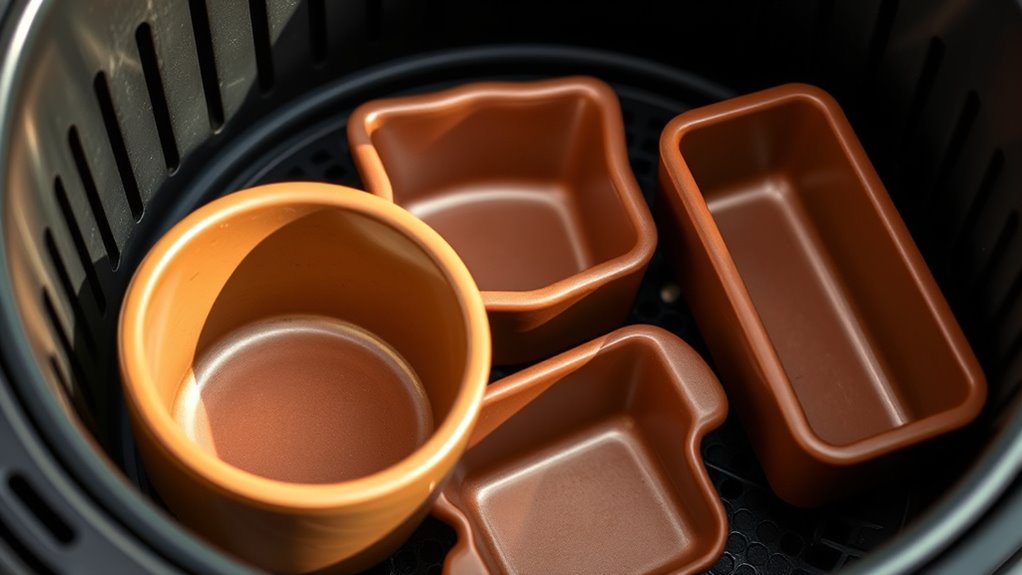
Choosing the right shape and depth for your bakeware is essential to guarantee your air fryer cooks evenly. You want a shape that fits snugly within your basket to ensure proper air circulation, which promotes even heat distribution. Rectangular or square pans that are no wider than 6-8 inches typically fit well. Opt for shallow dishes around 2-3 inches deep, as deeper pans can block airflow and lead to uneven cooking. The depth of your bakeware should allow hot air to circulate freely around your food, preventing longer cook times and uneven results. Avoid tall or bulky pans that restrict airflow, and instead select low-profile shapes designed specifically for air fryer use. Proper shape and depth help achieve consistent, delicious results every time. Additionally, selecting appropriate bakeware material can impact heat transfer and overall cooking performance, ensuring your baked goods turn out perfectly. Being mindful of airflow dynamics when choosing bakeware size can further enhance cooking efficiency and outcome.
Avoiding Handles That Limit Capacity
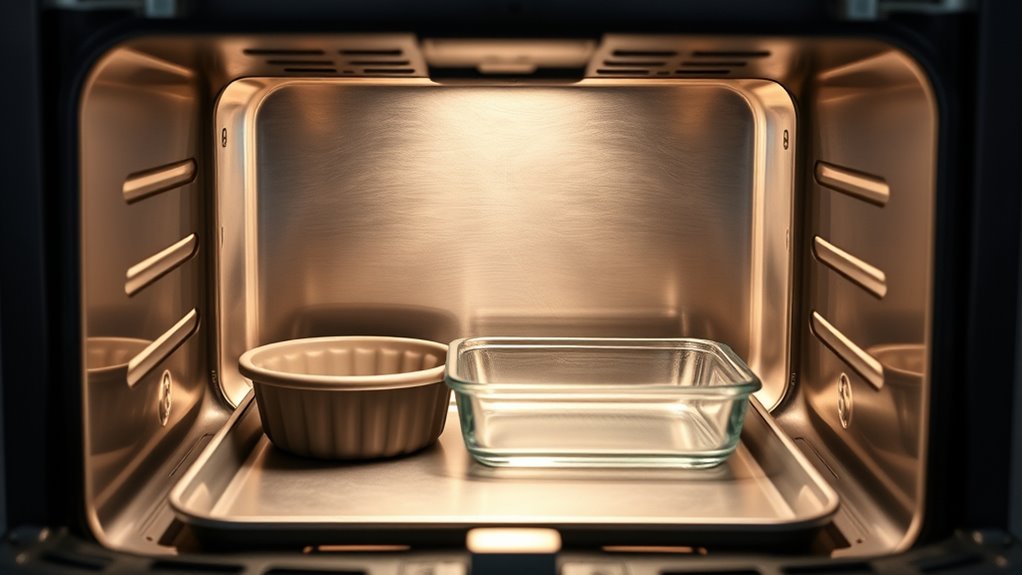
Bulky or large handles on bakeware can considerably reduce the available space inside your air fryer, limiting the size and number of items you can cook at once. Handles that extend beyond the edges can prevent the bakeware from fitting securely in the air fryer basket, causing instability. To maximize capacity, choose bakeware with minimal or no handles. – Look for bakeware with foldable or heat-resistant handles that don’t protrude. – Opt for handle-free options or those with short, removable handles to better utilize space. – Ensure handles don’t catch on the air fryer’s interior components, maintaining stability during cooking. Using bakeware with small or no handles allows you to fit larger or more pieces, making the most of your air fryer’s capacity. This helps you cook more efficiently without sacrificing space or safety. Additionally, selecting appropriate bakeware materials can improve heat distribution and durability during air frying, and choosing items with safe handle designs can reduce the risk of burns or accidents. For optimal results, consider handle design considerations that enhance both safety and functionality during your baking sessions.
Recommended Bakeware Types for Different Recipes
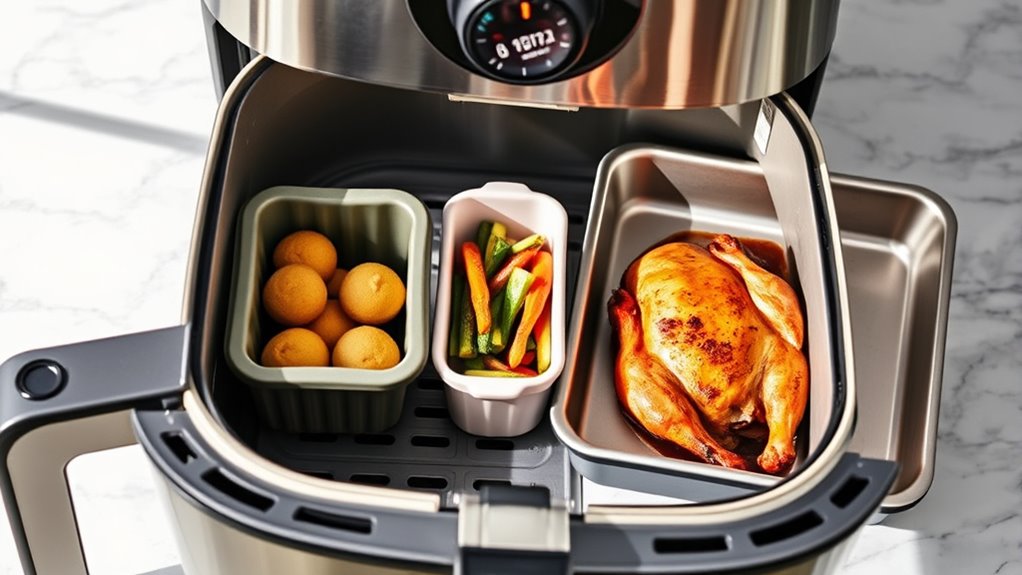
When selecting bakeware for your air fryer, it’s important to match the type to the recipe you’re making. Different recipes require specific air fryer bakeware to achieve the best results. For cakes and bread, non-stick round and square pans in 8-inch or 9-inch sizes work well, but always check that their dimensions fit within air fryer baskets for proper airflow. Silicone muffin cups and ramekins are versatile choices for individual portions and easy release. Springform pans are ideal for cheesecakes and layered desserts, thanks to their removable sides. Loaf pans in standard sizes, like 8.5×4.5 inches, suit bread and meatloaf recipes. Always verify that your bakeware’s dimensions fit comfortably within your air fryer to ensure even cooking.
Practical Advice for Prepping and Using Bakeware
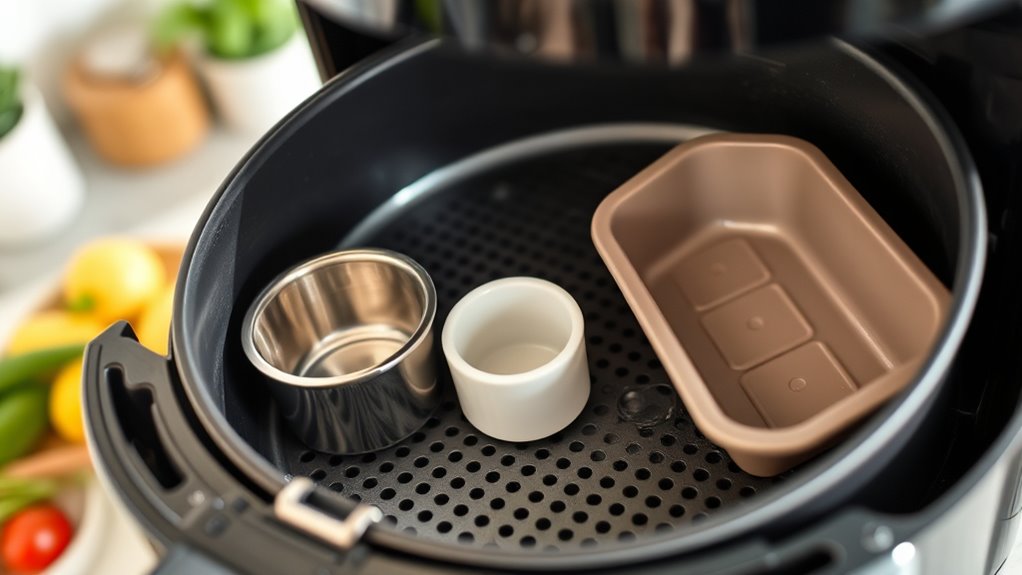
Start by measuring your air fryer’s interior dimensions to find the right size bakeware. Choose options with minimal or no handles to maximize space and guarantee a snug fit. Picking oven-safe materials like silicone, metal, glass, or ceramic helps your baked goods cook evenly and makes cleanup easier.
Measure Interior Dimensions
To guarantee your bakeware fits comfortably in your air fryer, it’s essential to measure the interior dimensions—width, height, and depth—accurately. Use a flexible ruler or measuring tape to get precise measurements of your air fryer basket’s available space. Remember, interior dimensions can vary between models of the same capacity, so always check your appliance’s specifications before buying new bakeware. It’s also important to account for handles or rims on bakeware, which can reduce usable space. Leaving some clearance around the bakeware ensures proper air circulation for even cooking and better results.
- Measure the interior width, height, and depth of your air fryer basket
- Use measurement tools like a tape or flexible ruler for accuracy
- Check your model’s specifications to confirm bakeware sizes fit properly
Select Handle-Free Options
Choosing handle-free bakeware makes it easier to fit larger items into your air fryer and simplifies the cooking process. Handle-free bakeware, like silicone molds or pans without protruding handles, maximizes interior space and allows for larger items to fit within the compact basket. It also prevents handles from obstructing the fit, especially in models with limited dimensions. When selecting handle-free options, carefully verify the dimensions to ensure they fit within your air fryer’s interior, considering both width and height. Handle-free bakeware also makes it easier to insert and remove baked goods without additional tools or oven mitts, boosting safety and convenience. By choosing handle-free bakeware, you streamline your baking experience and optimize space efficiency in your air fryer.
Troubleshooting Common Fit and Size Issues

When your bakeware doesn’t fit properly in your air fryer, it can hinder airflow and affect cooking results. To troubleshoot, first measure your air fryer’s interior dimensions—width, height, and depth—to ensure compatibility. Remember, even models with the same capacity can differ in size, impacting fit. Handles and thick rims can take up space, so opt for handle-free or slim-handle options for better compatibility. Avoid oversized or oddly shaped pans, which can block airflow or prevent the lid from closing. Consider using smaller, stackable, or multi-piece bakeware to maximize space without overcrowding. Always double-check the dimensions before purchasing to prevent fit issues and ensure your bakeware works efficiently within your air fryer.
Frequently Asked Questions
What Size Cake Pan Fits in an Air Fryer?
You’re wondering what size cake pan fits in your air fryer. Typically, an 8-inch round pan works well in most models with 8-9 inch interiors. If your air fryer is smaller, a 6-inch pan is better. For larger units, rectangular pans up to 7×7 inches fit comfortably. Always measure your basket before buying to guarantee a proper fit, and consider non-stick pans for easy cleanup.
What Bakeware Can Be Used in an Air Fryer?
Imagine you’re stepping into your kitchen’s version of a space age—your air fryer! You can use bakeware labeled “air fryer safe,” made from durable materials like carbon steel, aluminum, stainless steel, or borosilicate glass. Pick pans that fit comfortably inside, with minimal handles, to maximize space. Silicone, metal, glass, and ceramic options work well, just double-check they can handle high temperatures and are compatible with your model.
Why Are People Getting Rid of Air Fryers?
You’re wondering why people are ditching their air fryers. Many find the limited capacity frustrating, especially for larger meals. Some experience uneven cooking or feel they can’t match the versatility of traditional ovens. Concerns over durability, like non-stick coatings or heating elements, also play a role. Plus, cleaning can be a hassle, leading users to replace or abandon their units altogether, seeking more efficient or larger appliances.
How Do I Adjust My Air Fryer for Baking?
Adjusting your air fryer for baking begins with small, strategic steps. Start by decreasing the temperature about 25°F, then cut your cooking time roughly by 20%. Keep a close eye, checking around 30% of the original time, to prevent overcooking. Preheat your air fryer for perfect pastries, and remember, different models may need slight tweaks. Tweak, test, and triumph with your tailored, tasty treats!
Conclusion
Choosing the right bakeware for your air fryer is like finding the perfect key to unseal a world of delicious possibilities. When you match size and shape carefully, your culinary creations will rise, bake, and delight just as you’ve imagined. Don’t be discouraged by small setbacks—each fit is a stepping stone to mastering your air fryer’s potential. With these tips, you’ll turn your kitchen into a cozy, efficient bakery where every dish fits perfectly and tastes divine.
Fall Picks
fall essentials
As an affiliate, we earn on qualifying purchases.