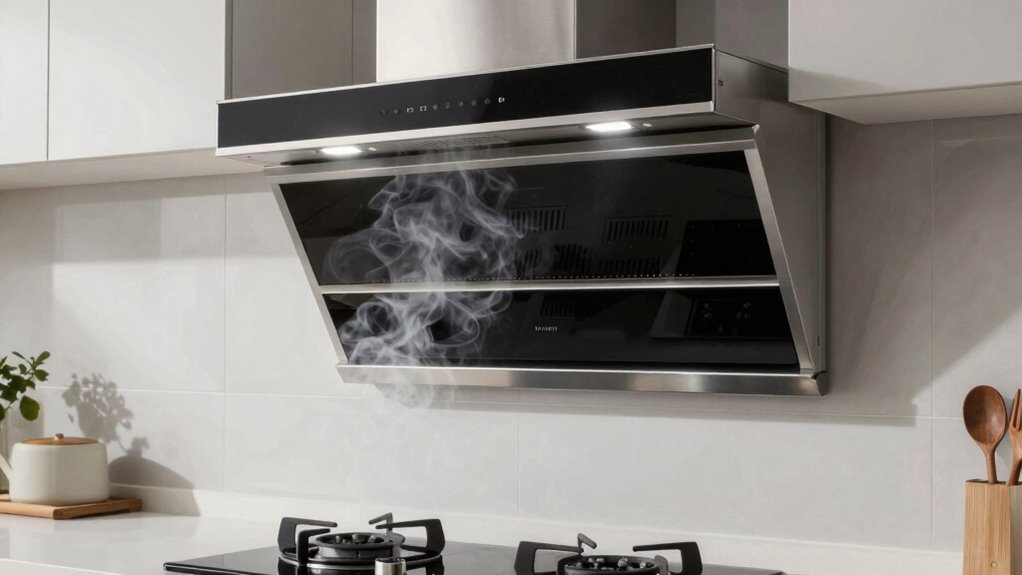
For ideal smoke capture, place your portable range hood 20-24 inches above your cooktop, making certain it’s close enough to trap fumes effectively. Adjust the height as needed to align with airflow patterns, avoiding placement too high or low. Positioning your hood based on your kitchen layout and cooking habits maximizes efficiency, while fine-tuning its placement ensures better results. Keep exploring to discover how to perfect your setup for cleaner, safer cooking.
Key Takeaways
- Mount the portable hood 20-24 inches above the cooktop for optimal smoke capture and airflow.
- Position the hood directly over the cooktop to create a clear airflow path and prevent smoke escape.
- Use adjustable brackets to fine-tune height and angle based on cooking habits and smoke flow.
- Observe smoke patterns during cooking to identify ideal placement and airflow direction.
- Ensure the hood is close enough to capture fumes effectively but not obstructing workspace or safety.
Why Proper Placement Is Key to Effective Range Hood Performance
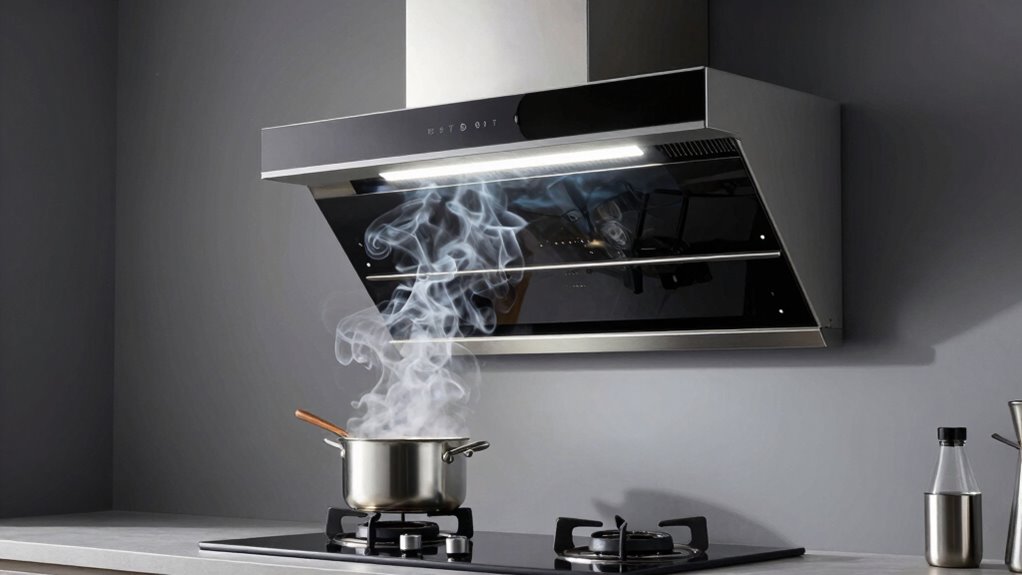
Proper placement of your portable range hood is essential because it directly impacts how well it captures smoke, grease, and odors. When positioned correctly, it maximizes ventilation efficiency, ensuring contaminants are effectively removed from your cooking area. Proper placement also helps reduce noise by minimizing the need for the fan to work harder or operate at higher speeds. If the hood is too far from your cooktop, smoke and fumes can escape before being captured, decreasing ventilation efficiency. Conversely, placing it too close might cause unnecessary noise and discomfort. The goal is to find a balance that optimizes airflow while keeping noise levels low. Understanding ventilation principles can help you optimize hood placement for the best results. Additionally, considering airflow dynamics can further enhance your setup to achieve optimal performance, especially by understanding how odor dispersion occurs in enclosed spaces. Properly analyzing airflow patterns can lead to more effective placement decisions that improve overall kitchen air quality.
How Close Should a Portable Range Hood Be to Your Cooktop?
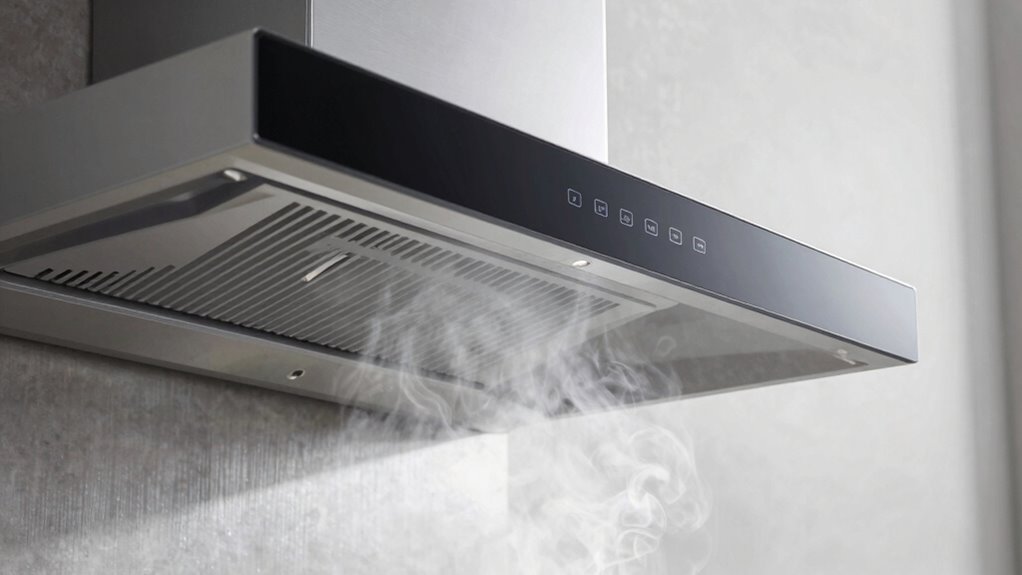
Positioning your portable range hood at the right distance from your cooktop is key to its effectiveness. Ideally, the hood should be close enough to capture smoke and fumes efficiently, enhancing airflow optimization. Typically, placing the hood 20 to 24 inches above the cooktop strikes a good balance, allowing it to absorb airborne particles without obstructing your cooking. Being too far reduces smoke capture, while too close can interfere with cooking ergonomics and cause heat buildup. Adjusting the distance to suit your specific setup guarantees maximum performance and comfort. Remember, the goal is to create a direct airflow path to trap smoke quickly while maintaining ease of movement. Proper placement enhances both the hood’s efficiency and your overall cooking experience. Additionally, considering ventilation effectiveness can help optimize your setup for better air quality. Ensuring proper airflow design is essential for maintaining a clean and safe kitchen environment. Incorporating nanotechnology-based filtration can further improve air purification and ensure a healthier cooking space. Optimizing airflow patterns also plays a crucial role in preventing smoke and odors from lingering in your kitchen, especially when adjusting the hood’s placement for optimal airflow dynamics.
What Is the Ideal Height for a Portable Range Hood?
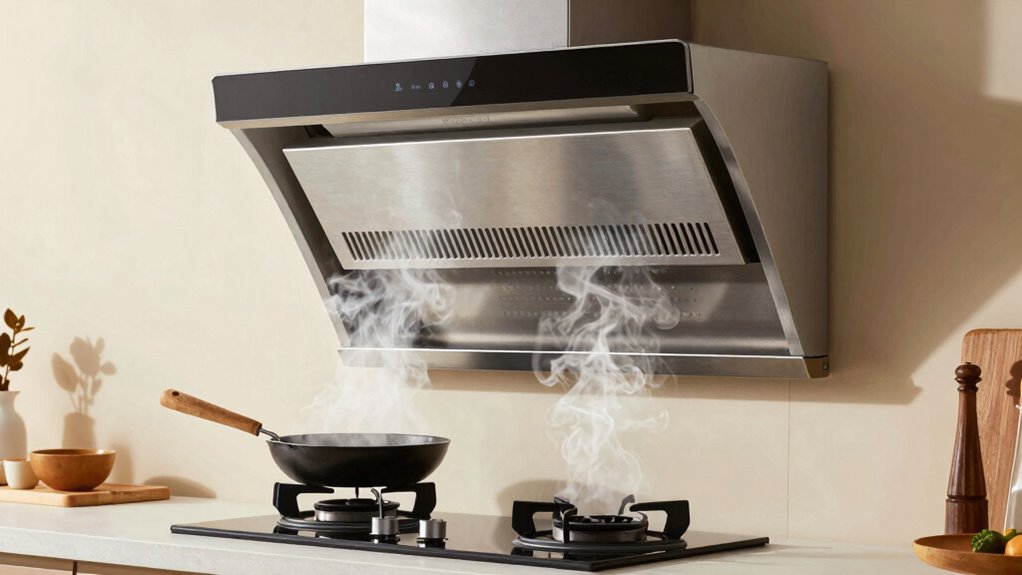
Finding the right height for your portable range hood is key to effective ventilation and safety. When mounted at the most suitable level, it prevents smoke spillage and ensures your cooking area stays clear. Proper placement also minimizes airflow disruption, enhancing the hood’s ability to capture smoke efficiently. Additionally, considering proper installation techniques can further optimize performance and extend the lifespan of your ventilation system. Ensuring correct tool setup not only improves efficiency but also reduces the risk of damage or malfunction, helping your system operate smoothly over time. Understanding ventilation principles can guide you in selecting the optimal height for your specific setup. Being aware of airflow dynamics can provide valuable insights into achieving the best results. Let’s explore how to choose that ideal height for your setup.
Optimal Mounting Height
Determining the ideal height for a portable range hood is essential to guarantee it effectively captures smoke, steam, and cooking odors without becoming intrusive. You should mount it high enough to maximize airflow but low enough to avoid obstructing your view or interfering with kitchen aesthetics. Typically, a height of 24 to 30 inches above the cooktop works well. This range allows the hood to efficiently extract contaminants while blending seamlessly with your space. If you prefer decorative options, choose a model that complements your kitchen’s style, ensuring it doesn’t disrupt the overall aesthetics. Proper height placement ensures the best performance without sacrificing visual appeal, making your kitchen both functional and attractive. Remember, the right height balances efficiency with the room’s design harmony, and considering ventilation effectiveness can further improve your kitchen’s air quality.
Preventing Smoke Spillage
To prevent smoke spillage, you need to install your portable range hood at the right height so it captures airborne particles before they disperse into your kitchen. Proper placement is essential for controlling cooking odors and enhancing kitchen ventilation. If the hood is too high, smoke escapes before being captured; too low, and it hinders your cooking space. Find a balanced height where the hood effectively pulls in fumes without obstructing your view or workspace. Consider the table below for guidance:
| Ideal Height Range | Benefits | Risks of Incorrect Placement |
|---|---|---|
| 24-30 inches above cooktop | Optimal smoke capture | Smoke spillage and lingering odors |
| 30+ inches | Less obstruction | Ineffective ventilation |
| Less than 24 inches | Better odor control | Obstructed view and safety concerns |
| Too high | Reduced airflow efficiency | Increased cooking odors |
| Too low | Safety hazards | Restricted movement and accidents |
Proper height guarantees efficient kitchen ventilation and keeps your space fresh.
Where Should You Place Your Range Hood Based on Your Kitchen Layout and Cooking Style?
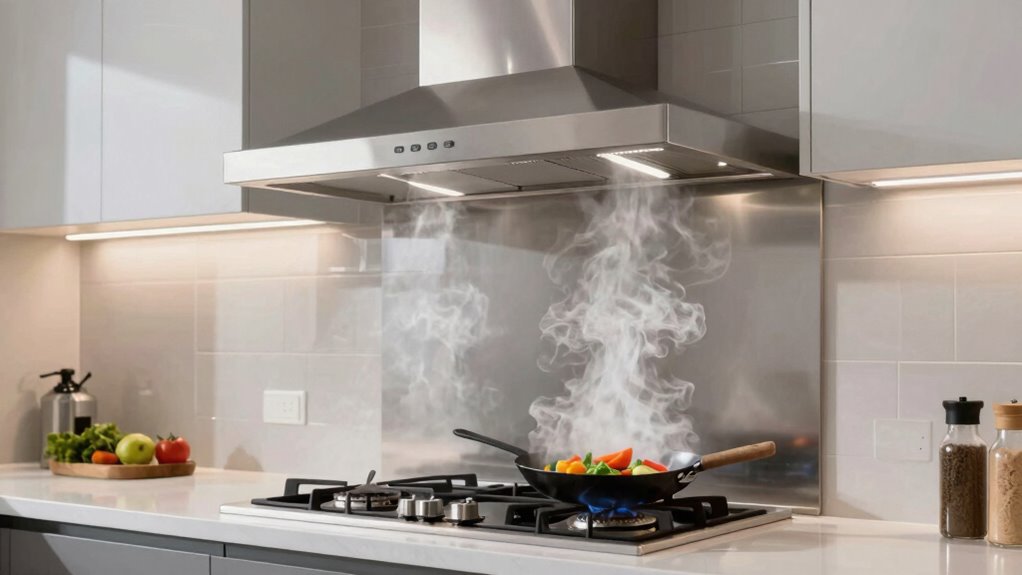
Your kitchen layout and cooking habits directly influence the ideal placement of your range hood. If you have a compact kitchen, consider a portable hood that fits seamlessly without cluttering your space. For open layouts, a sleek, decorative option can enhance aesthetics while capturing smoke effectively. Your cooking style also matters—frequent frying or grilling calls for a higher or more powerful hood placement. Budget considerations play a role; basic models may suffice for light use, while more decorative options with advanced features might be better if you cook often. Position your hood close to the cooktop, typically 24-30 inches above, to maximize smoke capture. Proper ventilation setup is essential for optimal performance and air quality. Additionally, understanding kitchen airflow can help you optimize overall air circulation and smoke extraction. Ensuring your exhaust system is correctly installed and maintained is crucial for consistent performance. Tailoring placement based on your kitchen’s design and your cooking frequency ensures excellent performance and style, especially when considering airflow patterns for improved efficiency. Furthermore, considering air exchange rates can help you evaluate how well your ventilation system will perform in your specific kitchen environment.
How Can You Identify Airflow Patterns in Your Kitchen?
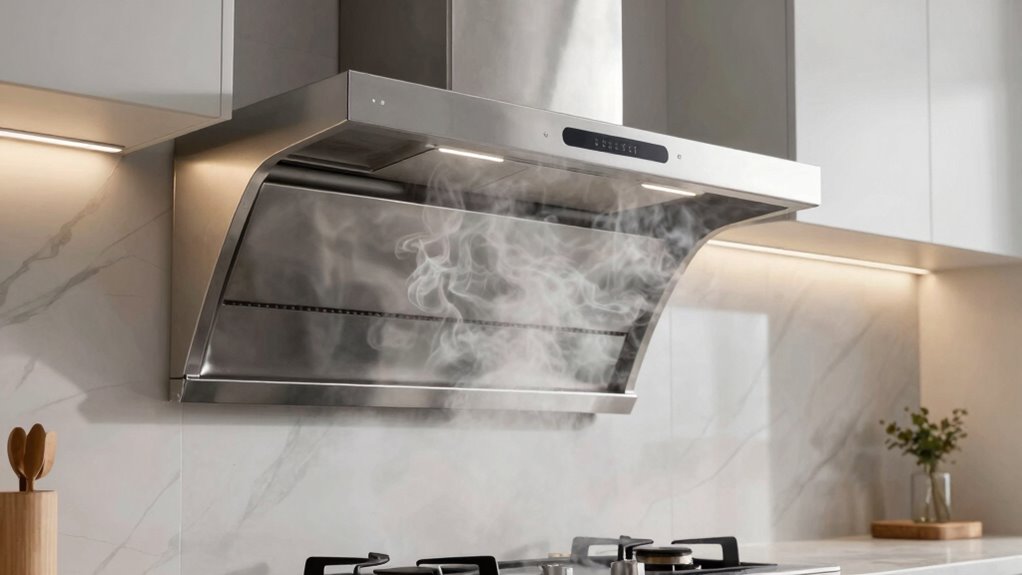
Understanding airflow patterns in your kitchen helps make certain your range hood works effectively. To identify these patterns, you can observe how air moves during cooking or use airflow visualization methods. These include:
Observing air movement during cooking reveals airflow patterns, ensuring your range hood functions optimally.
- Lighting a match or incense stick to see how the smoke drifts, revealing airflow directions. Smoke visualization techniques can provide clearer insights into airflow paths.
- Using a handheld fan to simulate airflow and observe how it influences smoke movement.
- Checking for drafts or vents that create predictable airflow paths across your kitchen.
- Incorporating essential oils for respiratory health, such as eucalyptus or peppermint oil, can also help you detect airflow by noticing how their aroma disperses in the space. Additionally, understanding air circulation can help optimize your range hood placement for better smoke capture. Using smoke tests can also provide visual confirmation of airflow paths, ensuring your setup captures smoke efficiently.
What Common Placement Mistakes Reduce Range Hood Effectiveness?

Have you placed your range hood too high or too low? This common mistake can considerably reduce its effectiveness. Many fall for ventilation myths, believing higher is better, but smoke and fumes need proper capture zones. Incorrect placement disrupts airflow and ignores key design considerations. To help identify mistakes, consider this table:
| Mistake | Effect |
|---|---|
| Mounting too high | Smoke escapes before being captured, reducing efficiency |
| Mounting too low | Obstructs cooking, causes poor airflow |
| Ignoring airflow patterns | Creates dead zones where smoke lingers |
| Neglecting clearance and height guidelines | Limits smoke capture and ventilation effectiveness |
Ensuring proper ventilation setup is essential for optimal smoke capture. Additionally, understanding and applying airflow patterns can greatly improve the hood’s performance. Avoid these errors, and ensure your range hood is positioned where it catches smoke at its source for maximum effectiveness.
How Can You Make Your Range Hood Placement More Flexible and Adjustable?
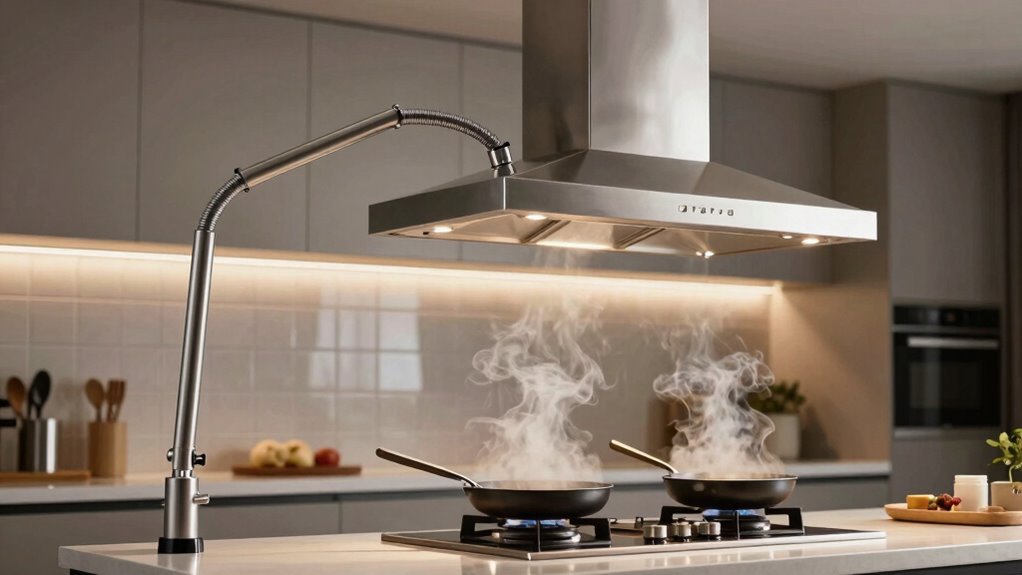
To make your range hood placement more flexible, consider using adjustable mounting options that let you change its height and angle easily. Flexible venting techniques, like removable or adaptable ducts, also help you position the hood where it works best. These adjustments ensure you get ideal ventilation without permanent restrictions.
Adjustable Mounting Options
Adjustable mounting options give you the flexibility to position your range hood exactly where it’s most effective and convenient. Using sturdy mounting brackets and reliable adjustment mechanisms, you can easily modify the height and angle of your hood. This guarantees ideal smoke capture without compromising kitchen aesthetics. Look for mountings that allow smooth adjustments, so you can fine-tune the placement as needed. Many mounting brackets come with locking features to keep your hood secure after adjustments. Some adjustment mechanisms enable vertical and horizontal movement, giving you greater control. This flexibility is especially helpful if your setup changes over time or if you want to optimize airflow. With adjustable mounting options, you can customize your range hood placement for maximum efficiency and comfort.
Flexible Venting Techniques
Flexible venting techniques enable you to adapt your range hood’s exhaust system to fit various kitchen layouts and installation constraints. Using versatile venting systems, you can choose between ducted or ductless options, depending on your space and preferences. Flexible ducting allows you to route the exhaust in multiple directions, making installation easier in tight or awkward spaces. This adaptability helps optimize kitchen airflow, ensuring smoke and fumes are effectively captured regardless of hood placement. You can also incorporate adjustable vent collars or flexible hoses to fine-tune the venting path. By implementing these techniques, you gain greater control over your range hood’s performance, ensuring it captures smoke efficiently while accommodating different kitchen designs and ventilation needs.
How Do You Test and Fine-Tune Your Range Hood’s Position for Best Results?
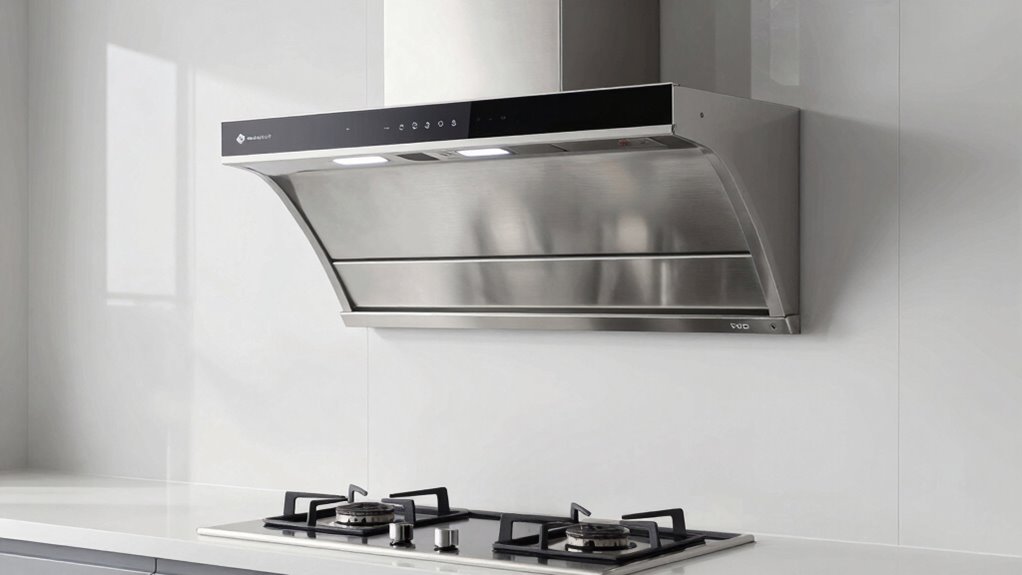
Before finalizing the placement of your range hood, it’s essential to test its effectiveness and make necessary adjustments. To do this, turn on your stove and observe how well the hood captures smoke and odors. Use a smoke pen or light incense near the cooking surface to see airflow patterns. Check for any smoke escaping or lingering, which indicates airflow issues. Adjust the hood’s height or angle to improve ventilation efficiency.
Test your range hood by lighting incense or a smoke pen to ensure proper airflow and smoke capture.
- Position the hood so airflow directs smoke straight into the vent
- Ensure the hood is close enough to capture rising fumes but not so close it obstructs cooking
- Test different heights and angles for ideal airflow optimization and smoke capture
What Maintenance and Safety Tips Should You Follow for Range Hood Placement?
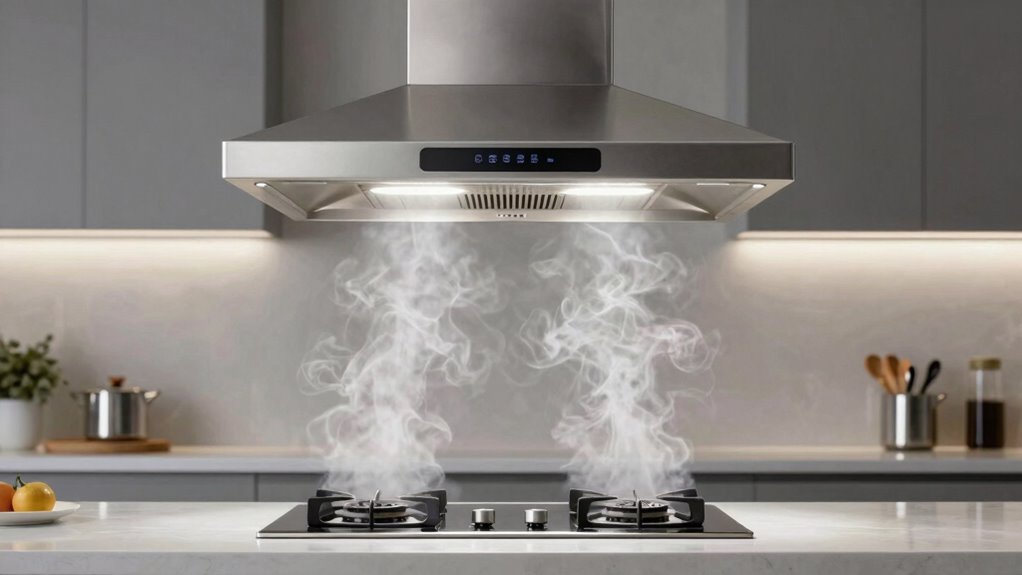
Maintaining and guaranteeing safety with your range hood placement is crucial for peak performance and peace of mind. Regular cleaning schedules keep your range hood functioning efficiently and prevent grease buildup that could pose fire hazards. Check and clean filters weekly, replacing them as recommended by the manufacturer to maintain ideal airflow and smoke capture. Ensure your range hood is securely installed and all electrical connections are safe and intact. Avoid blocking vents or obstructing airflow, which can compromise safety and performance. Keep the area around the range hood clear of flammable objects. Regular maintenance not only preserves the effectiveness of your range hood but also guarantees safe operation, giving you confidence that your kitchen remains a safe and smoke-free environment.
Frequently Asked Questions
Can Portable Range Hoods Be Installed Outdoors or in Open Kitchens?
Yes, you can install portable range hoods outdoors or in open kitchens. Outdoor installation works well because it helps vent smoke and odors directly outside, preventing buildup. For open kitchens, portable hoods are suitable because they don’t require permanent installation and can be moved around to capture smoke effectively. Just make certain the hood is durable enough for outdoor conditions and properly vented for maximum performance.
How Does Ceiling Height Affect Portable Range Hood Placement?
Ceiling height impacts your portable range hood placement by influencing installation challenges and effectiveness. If your ceiling is high, you’ll need a longer duct or extension to guarantee proper smoke capture. Conversely, low ceilings may restrict placement options and make installation trickier. To maximize smoke removal, position the hood closer to the cooktop, but consider ceiling height to avoid installation issues and ensure ideal performance.
Are There Specific Placement Guidelines for Different Types of Cookware?
You should position your portable range hood based on cookware compatibility and burner placement. For ideal smoke capture, align the hood directly above the burners you use most frequently, ensuring it covers the entire cooking area. Consider the size of your cookware—larger pots and pans need more coverage. Adjust the hood’s height to accommodate various cookware, but keep it close enough to effectively capture smoke without obstructing your view or airflow.
How Does Ventilation Affect Portable Range Hood Effectiveness?
Ventilation plays an essential role in your portable range hood’s performance, so don’t ignore it! You want airflow optimization to maximize exhaust efficiency, meaning your hood captures smoke and odors effectively. Poor ventilation can turn your kitchen into a smoke-filled comedy show. Keep vents unblocked, guarantee proper ducting, and avoid airflow disruptions. When you do, your hood becomes a superhero, swiftly clearing your culinary chaos with minimal effort.
Can Portable Range Hoods Be Used as Primary Ventilation in Small Kitchens?
You can use portable range hoods as primary ventilation in small kitchens, but their effectiveness depends on proper duct placement and airflow enhancement. Position the hood close to your cooktop to maximize smoke capture, and ensure the duct directs air efficiently outside. While they help reduce odors and smoke, they may not fully replace a dedicated ventilation system, especially in larger spaces. Proper setup is key for ideal performance.
Conclusion
By paying close attention to your range hood’s placement, you create a gentle breeze that guides smoke and odors smoothly away from your cooking area. When you find that perfect spot, it’s like setting a calm, invisible hand that keeps your kitchen fresh and inviting. With a little patience and adjustment, you’ll craft a space where air flows effortlessly, making every meal prep feel more comfortable and enjoyable—like a quiet dance of clean, clear air.