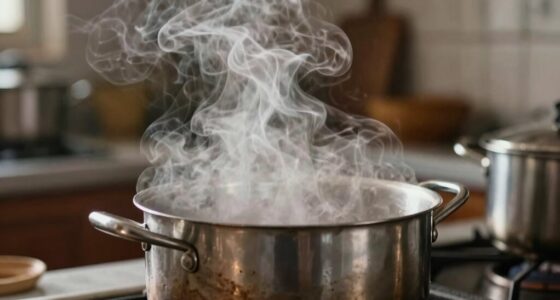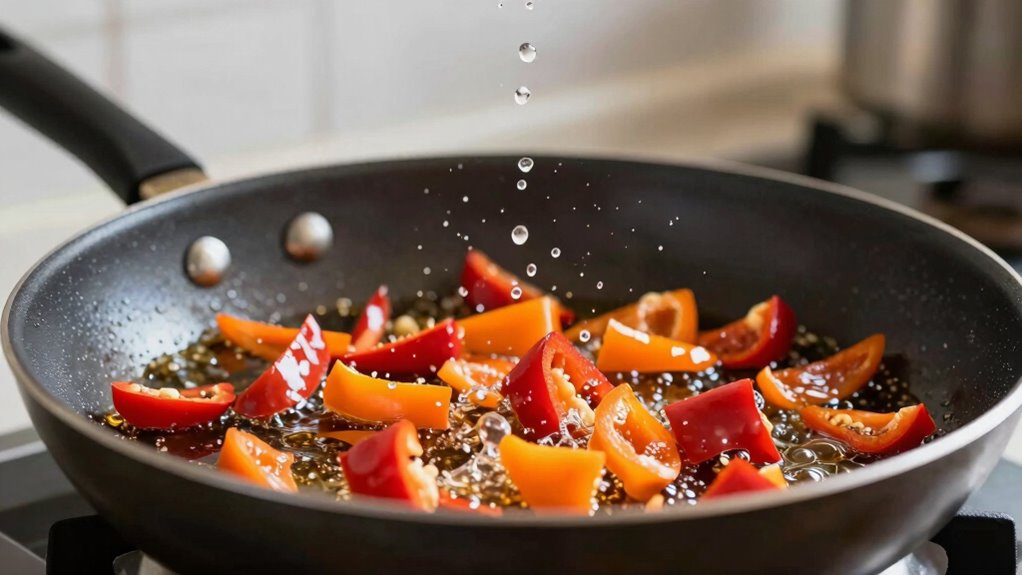
Foods with high moisture content, like sauces, soups, or tomatoes, cause more splatter because they boil rapidly and release steam, leading to bubbling and hot splashes. When heated quickly, these foods produce lots of vapor, increasing pressure inside containers and causing splashes or even eruptions. Low-moisture foods like dry meats or bread tend to stay more contained. To understand how cooking techniques affect splatter, keep exploring how moisture levels influence mess during cooking.

Get kitchen gear delivered free with Prime
- Fast, free delivery on millions of items
- Prime Video, Amazon Music and more included
- Member-only deals all year
Key Takeaways
- Foods with higher moisture content generate more steam, increasing splatter during heating.
- Rapid heating causes uneven boiling, leading to more bubbling and splashes.
- Sealed containers trap steam, raising pressure and causing explosive splashes.
- High-moisture foods release hot liquids that bubble and splatter more easily.
- Proper covering techniques help contain steam and reduce food splatter during cooking.
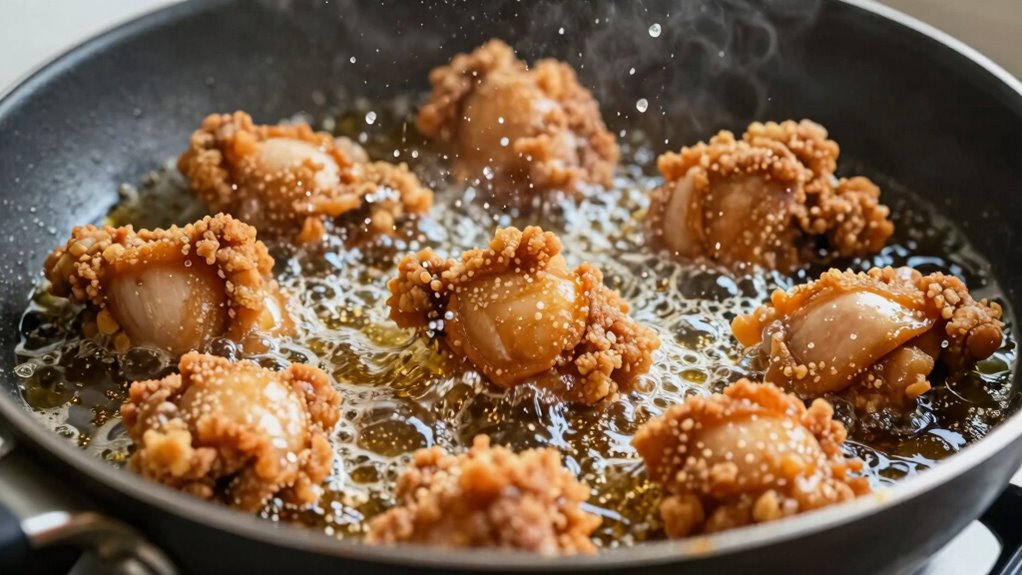
Have you ever noticed how some foods seem to splatter more when you cook or microwave them? It’s a common frustration, and understanding why can help you manage the mess better. The main reason lies in the nature of the food itself, especially its food moisture content, and how you handle it with different cooking techniques. When you microwave or cook foods that contain a lot of water, they tend to produce more splatter because of rapid boiling and steam release. For example, foods like tomatoes, sauces, or even soups release hot, bubbling liquids that jump out of the container if not monitored carefully. When you use certain cooking techniques, like microwaving, the heat causes water molecules inside the food to turn into steam quickly, and if the steam isn’t allowed to escape, pressure builds up, resulting in bursts of splatter. food moisture content significantly impacts how much mess is created during cooking. Additionally, the pressure buildup caused by trapped steam further increases the likelihood of splattering, especially in tightly sealed containers. Foods with high moisture content, such as fruits, vegetables, and moist meats, release more steam and are more prone to splattering during cooking. The moisture turns into vapor rapidly, and if your cooking method traps this vapor, it creates pressure inside the food or container, leading to splashes. On the other hand, foods with low moisture, like bread or dry meats, tend to produce less splatter because they don’t generate as much steam. That’s why you often see less mess when heating up dry snacks or baked goods. Your choice of cooking techniques also influences splatter. Microwave cooking, in particular, is notorious for causing splashes because it heats food unevenly and rapidly. When you microwave foods without covering them properly, the sudden boiling or bubbling of moisture causes splatter to fly everywhere. Covering your food with a microwave-safe lid or vented paper towel creates a barrier that contains the steam and reduces mess. Using proper covering techniques can significantly decrease the amount of splatter and keep your microwave cleaner. Additionally, cooking methods that involve slower, more even heating can help minimize splatter and keep your kitchen cleaner. In fact, adjusting the cooking temperature and duration can also play a key role in reducing mess and preventing steam buildup.
As an affiliate, we earn on qualifying purchases.
Frequently Asked Questions
How Does Oil Temperature Affect Splatter During Cooking?
When you cook with oil, higher temperatures cause more splatter because oil reaches smoke point faster, releasing smoke and tiny droplets. As heat transfer increases, oil becomes more volatile, making splatter more likely. If oil is too hot, it produces smoke and splashes, so maintaining an ideal temperature minimizes splatter. Managing oil temperature helps control splatter, preventing messes and ensuring safer, cleaner cooking.
Can Cookware Material Influence Food Splatter Levels?
Yes, cookware material influences splatter levels. If your cookware isn’t compatible with your stove or doesn’t distribute heat evenly, food may cook unevenly, increasing splatter. Materials with good heat conduction properties, like copper or cast iron, help maintain steady temperatures, reducing sudden boiling or bubbling that causes splatter. Choosing the right cookware compatibility and high-quality materials guarantees safer, cleaner cooking with less mess from splattering.
Does Food Moisture Content Impact Splattering?
Moisture matters when it comes to food splatter; higher food moisture often means more splattering, especially during sizzling or searing. As moisture turns to steam and vapor, it causes energetic eruptions that can spatter messes far and wide. To minimize mess, aim for dry, well-prepared foods, and practice proper splatter reduction techniques. Keeping moisture levels manageable helps contain splashes and keeps your cooking cleaner and calmer.
Are There Safety Tips to Minimize Kitchen Splatter?
To minimize kitchen splatter and guarantee safety, you should use splatter guards or lids when frying or sautéing. Keep a safe distance from hot oil and avoid overcrowding the pan, which can cause overflow. Always wear protective clothing, like aprons, and clean up spills immediately to prevent slips. Practicing good kitchen safety and splatter prevention keeps your cooking area cleaner and reduces the risk of burns or accidents.
How Does Food Size and Shape Contribute to Splattering?
Food size and shape considerably impact splattering because larger or irregularly shaped pieces, especially with uneven textures, tend to splatter more during cooking. You can minimize this by adjusting your cooking techniques, like using lower heat or covering pots. Foods with a smoother texture and uniform shape generally splatter less. Being mindful of food size and shape helps you control splatter, making your cooking safer and cleaner.
Conclusion
Next time you microwave foods, remember that some, like oily or high-moisture items, are more likely to splatter. In fact, studies show that over 90% of microwave messes come from just a handful of foods. By covering your dishes or adjusting cooking times, you can reduce the mess and make cleanup easier. So, take these tips to heart and enjoy a cleaner, less stressful microwave experience!
Evergreen bestsellers Picks
bestsellers
As an affiliate, we earn on qualifying purchases.