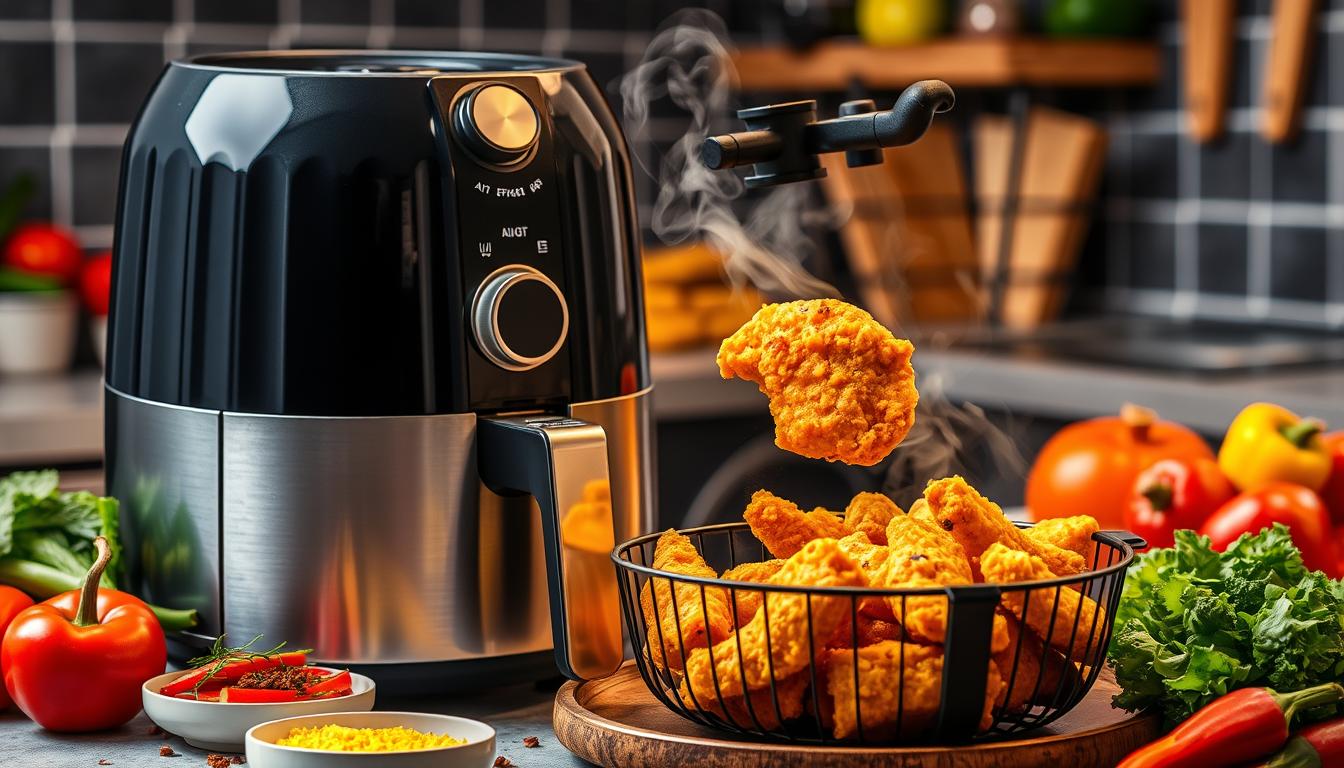
To teach teens to cook safely with an air fryer, show them how it works and stress reading manufacturer instructions carefully. Emphasize proper placement for ventilation, handling food and accessories safely, and monitoring temperatures and cooking times. Teach them to avoid burns by using heat-resistant gloves and cleaning the appliance regularly. Building responsible habits will keep everyone safe, and if you keep exploring, you’ll discover even more tips to guarantee safe and confident air fryer use.
Key Takeaways
- Teach teens to read and follow the manufacturer’s instructions and safety guidelines before using the air fryer.
- Supervise initial use to ensure proper placement, ventilation, and adherence to maximum fill lines.
- Instruct teens on safe handling of raw foods, separate utensils, and thorough handwashing to prevent cross-contamination.
- Emphasize correct timing and temperature settings, using food thermometers to confirm safe internal temperatures.
- Encourage routine cleaning, safe equipment handling, and awareness of fire safety procedures for responsible use.
Understanding How an Air Fryer Works

An air fryer cooks food by circulating hot air around it, similar to a convection oven, but on a smaller scale. This process relies on advanced air fryer technology, which uses a powerful fan and heating element to evenly distribute heat. The appliance features a compact design with a basket or tray for holding food, allowing for quick air circulation. When turned on, the heating element rapidly heats the air, while the fan ensures consistent movement, creating a crispy exterior without deep frying. Understanding these core components helps you grasp how an air fryer produces results similar to traditional frying but with less oil. Additionally, the mechanism of heat circulation is essential to understanding how the appliance operates efficiently. By knowing how this technology works, you’ll be better equipped to use your air fryer safely and effectively.
Reading and Following Manufacturer Instructions

Before you start cooking with your air fryer, it’s important to carefully read and follow the manufacturer’s instructions. These instructions provide essential information on how to operate the appliance safely and effectively. Pay close attention to the safety guidelines, such as maximum fill lines, recommended cooking times, and proper handling of accessories. Following the manufacturer’s instructions helps prevent accidents like fires or burns and guarantees your air fryer lasts longer. Each model may have unique features or precautions, so don’t skip the manual. If anything is unclear, consult the manufacturer’s website or customer support. Teaching teens to prioritize reading and following these instructions sets a foundation for safe, confident cooking. It’s a simple but vital step in their kitchen safety education. Self Watering Plant Pots are a good example of products that require careful adherence to instructions to ensure proper use and longevity.
Proper Placement and Ventilation in the Kitchen

To guarantee safe and efficient air fryer use, you need to pay attention to proper placement and ventilation in your kitchen. Your kitchen layout matters—place the air fryer on a stable, heat-resistant surface away from water sources and countertops cluttered with flammable items. Ensure there’s enough space around the appliance for proper airflow. Your ventilation setup is equally important; use an exhaust fan or open a window to help remove heat, steam, and cooking odors. Proper ventilation prevents overheating and reduces smoke buildup. Avoid placing the air fryer near cabinets or curtains that could catch fire or block airflow. By positioning your air fryer correctly and maintaining good ventilation, you keep your kitchen safer and your appliance functioning efficiently. Recognizing angel numbers can also guide you toward better decision-making in your home environment.
Safe Handling of Food and Accessories

Handling food and accessories properly is key to cooking safely with an air fryer. Always store raw meats separately from ready-to-eat foods to prevent cross contamination. Use separate cutting boards and utensils for raw and cooked items, and wash your hands thoroughly after handling raw ingredients. When it’s time to cook, ensure food is stored at the correct temperature and properly thawed before cooking. Clean accessories like trays and racks after each use to avoid bacteria buildup. Avoid overcrowding the air fryer, which can cause uneven cooking and potential safety hazards. By practicing proper food storage and handling techniques, you’ll minimize risks and ensure safe, delicious meals every time. Staying organized and hygienic helps keep everyone healthy and safe in the kitchen.
Monitoring Cooking Times and Temperatures
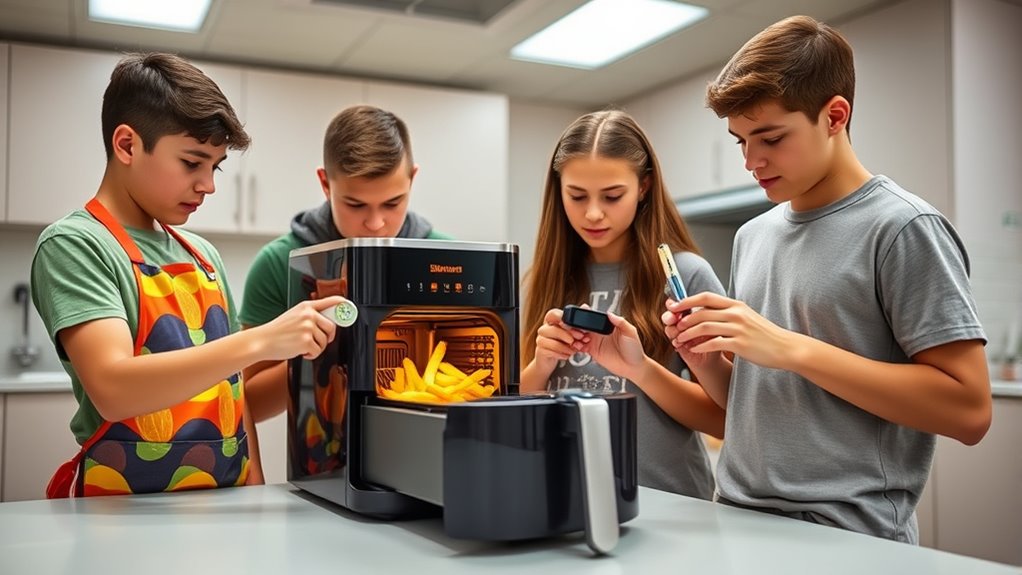
You need to set accurate timers to prevent overcooking or undercooking your food. Using a food thermometer helps guarantee your dishes reach safe temperatures. Paying attention to both timing and temperature keeps your cooking safe and delicious. Being aware of the temperature management involved in air fryer use can further improve your results.
Setting Accurate Timers
Accurate timers are essential for safe and successful air fryer cooking, especially for teens learning the basics. Proper calibration techniques help guarantee your timer settings are precise, preventing overcooking or undercooking. To verify your timer’s accuracy, set it for a known interval, like 10 minutes, and observe if it matches the actual time. If it’s off, reset or replace the timer as needed. When cooking, always double-check the timer settings before starting, and avoid rushing the process by relying solely on the air fryer’s default times. Consistently accurate timers help you develop good habits and ensure your food is cooked safely. Mastering calibration techniques and setting timers correctly builds confidence, making teens more comfortable and responsible in the kitchen. Additionally, understanding anime culture and storytelling can make the learning process more engaging and enjoyable for teens interested in diverse media.
Using a Food Thermometer
Using a food thermometer is a crucial step in ensuring your air-fried foods are cooked safely and thoroughly. Accurate temperature readings help prevent foodborne illnesses by confirming items reach safe internal temperatures. To maximize food safety and temperature accuracy, keep these tips in mind:
- Insert the thermometer into the thickest part of the food for precise readings.
- Clean the probe after each use to avoid cross-contamination.
- Use a digital thermometer for faster, more accurate results.
- Check temperatures regularly as cooking progresses to prevent under or overcooking.
- Understanding contrast ratio in appliances can help you select tools with better performance and reliability.
Preventing Burns and Scalds During Use

To prevent burns and scalds during air fryer use, it is essential to handle the appliance carefully and stay alert to hot surfaces. Always wear protective gloves when touching hot components or lifting the basket to avoid direct contact with high temperatures. Before opening the air fryer, check for caution signs or indicator lights that signal it’s still hot. Keep your hands and face away from the hot air vents and exposed heating elements. Use tongs or heat-resistant tools instead of bare hands to remove food. Be mindful of steam escaping when opening the basket, as it can cause burns. Staying attentive and using protective gear minimizes the risk of injury while cooking with an air fryer.
Cleaning and Maintenance for Safe Operation

Regularly cleaning and maintaining your air fryer helps keep it safe to use and guarantees it performs efficiently. Follow simple cleaning tips and maintenance routines to prevent buildup and ensure longevity. Always unplug the appliance before cleaning. Remove the basket and tray, then wash them with warm, soapy water. Wipe down the interior with a damp cloth, avoiding harsh abrasives. Check the heating element for residue or debris. Regularly inspect the cord and plug for damage. For deeper cleaning, occasionally use vinegar or baking soda to eliminate odors. Keep the vents clear for proper airflow. Proper maintenance routines not only extend your air fryer’s lifespan but also keep it operating safely for your teen’s cooking adventures. Being aware of the weight of appliances can also help prevent accidents during storage or moving.
Developing Responsible Cooking Habits

Building responsible cooking habits starts with practicing safe techniques and using your equipment properly. You should always follow safety guidelines and handle the air fryer with care to prevent accidents. Regular cleaning and maintenance help make certain your appliance stays safe and ready for every use. Additionally, understanding how to operate your air fryer efficiently can extend its lifespan and improve cooking results, reinforcing the importance of proper appliance use.
Safe Cooking Practices
Learning safe cooking habits is essential for preventing accidents and ensuring your food is healthy and properly prepared. When using an air fryer, always check for food allergies before cooking, and avoid cross-contamination by cleaning surfaces thoroughly. Practice kitchen fire safety by never leaving the air fryer unattended, keeping flammable items away, and knowing how to respond if a fire occurs. To develop responsible habits, remember to:
- Read and follow all safety instructions in the air fryer manual
- Use heat-resistant gloves when handling hot parts
- Keep a fire extinguisher nearby and know how to use it
- Avoid overfilling the basket to prevent spills and smoke
These practices help you cook safely, protect your health, and build responsible habits for any kitchen task.
Proper Equipment Use
Using your air fryer properly starts with understanding how to operate its controls and handle its parts safely. Always read the instruction manual before use to familiarize yourself with the appliance’s features. When selecting air fryer accessories, make sure they’re compatible and oven-safe to prevent accidents. Proper equipment use also means avoiding overcrowding the basket, which can cause uneven cooking or potential hazards. Keep the air fryer on a stable, heat-resistant surface, away from water and clutter. Using accessories correctly and respecting the appliance’s limits promotes kitchen safety and helps prevent burns or damage. Developing responsible habits includes turning off the air fryer after use and handling hot parts carefully. Consistently following these precautions ensures safe, effective cooking every time.
Cleaning and Maintenance
Proper equipment use also involves regular cleaning and maintenance to keep your air fryer safe and functioning well. Establishing a consistent cleaning schedule ensures it stays in top shape. Be sure to clean the air fryer accessories, like the basket and tray, after each use to prevent buildup. Regularly wipe down the interior with a damp cloth to remove grease and food particles. Remember, neglecting maintenance can affect performance and safety. Here are some key points to keep in mind:
- Use non-abrasive cleaners to protect surfaces
- Check for any damaged or worn parts
- Avoid submerging the main unit in water
- Store accessories in a clean, dry place
- Regular filter changes are essential if your air fryer incorporates air purification technology, ensuring optimal function and safety.
Frequently Asked Questions
How Can Teens Troubleshoot Common Air Fryer Problems Safely?
When troubleshooting air fryer problems, you need to stay safe and keep the appliance in good condition. First, check the air fryer’s manual for error codes and follow the troubleshooting steps. Regular air fryer maintenance, like cleaning the basket and checking the power cord, prevents issues. If problems persist, unplug the device and avoid opening it yourself. This way, you avoid electrical hazards and keep your air fryer working efficiently.
What Are the Best Beginner Recipes for Teens Using an Air Fryer?
When exploring beginner recipes for your air fryer, focus on simple, safe options like crispy chicken nuggets, roasted veggies, or homemade fries. These recipes help you learn air fryer safety by avoiding overcrowding and monitoring cooking times. Start with basic ingredients, follow instructions closely, and always keep an eye on your food. With these beginner recipes, you’ll build confidence and master safe, delicious meals using your air fryer.
How Do I Store Leftovers Safely After Air Frying?
Think of food storage as safeguarding treasure; you want leftovers safe from spoilage. After air frying, let your leftovers cool briefly, then transfer them to airtight containers. Store them in the refrigerator within two hours to guarantee leftovers safety. Label containers with dates to track freshness. Proper food storage prevents bacteria growth, keeping your meals delicious and safe to enjoy later. Always reheat leftovers thoroughly before eating.
Are There Specific Foods Teens Should Avoid Air Frying?
When considering foods to avoid in an air fryer, safety considerations are key. You should steer clear of foods with high moisture content, like certain vegetables, as they can cause splattering or uneven cooking. Raw meats that aren’t properly seasoned or prepared may pose health risks. Always check manufacturer guidelines, and remember that some foods, like delicate baked goods, may not cook well. Being cautious helps prevent accidents and guarantees safe, delicious results.
How Can Teens Learn to Adjust Cooking Times for Different Recipes?
Think of adjusting cooking times as your own culinary ‘hack.’ To master it, start by noting ingredient substitutions and how they affect cooking. Keep a kitchen journal, recording temperature adjustments for different foods. When trying new recipes, check for visual cues and use a timer. With practice, you’ll intuitively know when to tweak times, making your air frying skills as legendary as a vintage game console!
Conclusion
By following these safety tips, you’ll master the art of using an air fryer without any mishaps. Think of yourself as a culinary superhero, confidently steering cooking adventures with ease. Remember, safety isn’t just a rule — it’s your superpower that keeps your kitchen accident-free and your food delicious. Stay vigilant, keep learning, and soon you’ll be a pro at safe, tasty air fryer meals every time!