TL;DR

Get kitchen gear delivered free with Prime
- Fast, free delivery on millions of items
- Prime Video, Amazon Music and more included
- Member-only deals all year
Ideal Home has published six recommendations for drying laundry indoors while limiting extra moisture in the home. The advice includes using an extra spin cycle, spacing garments, choosing an airer location with airflow and ventilating the room; heated airers and dehumidifiers are optional aids.
Ideal Home has published six tips for drying laundry indoors during cold or wet weather, advising households to remove more water in the wash, leave space between garments and manage moisture and airflow in the room. The recommendations address a common household trade-off: drying clothes inside is convenient when outdoor drying is impractical, but wet laundry releases moisture into the home.
The guide recommends running an extra spin cycle before hanging clothes, provided the selected spin speed is suitable for the garments. Its report says this can leave less water in laundry, potentially shortening drying time and reducing the amount of moisture released indoors. It particularly identifies towels, jeans and bedding as heavier items that may retain water.
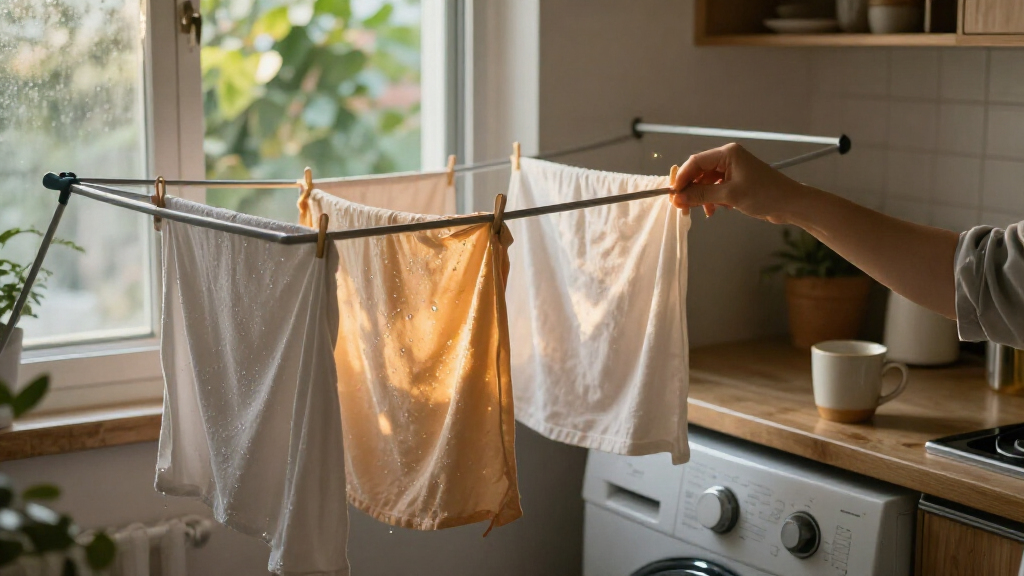
It also advises leaving space between clothes on the rack, spreading out sleeves and opening shirts so air can move around the fabric. Lauren Roelofs, a laundry expert at Brabantia, says avoiding an overcrowded rack helps air circulate and clothes dry more evenly. The guide recommends turning heavier items partway through drying to reduce the chance of damp patches.
The remaining advice concerns equipment and placement: use a heated clothes airer if useful, pair it with a dehumidifier to remove moisture from the room, keep the rack slightly away from walls, and ventilate the room. The source says a cover for a heated airer may reduce drying times by a couple of hours, depending on the load and conditions. It does not provide independent test results for the six recommendations as a group.
Reducing Moisture From Indoor Drying
Wet laundry releases water into indoor air as it dries. In rooms with limited airflow or moisture removal, that can contribute to higher indoor humidity and condensation, conditions associated with damp and mould concerns. The practical value of the guidance is that it combines steps that may reduce drying time with measures aimed at moving or removing moisture.
Some measures require no new equipment: use a suitable spin cycle, avoid packing the rack tightly, and give the room ventilation. A heated airer can help dry clothes, but, as the report explains, it does not itself remove moisture released into the room. A dehumidifier is intended to address that moisture, though its usefulness and running cost will depend on the appliance, room and conditions.
Products Worth Considering

Breville Bambino Espresso Machine, Brushed Stainless Steel (BES450BSS)

De'Longhi Magnifica Evo Fully Automatic Espresso Machine with Manual Milk Frother, Silver

Ninja Foodi Smart 6-in-1 Indoor Grill and Air Fryer, 4 Qt, FG551
As an affiliate, we earn on qualifying purchases.
Why Indoor Laundry Needs Airflow
The report frames the advice around cold and wet weather, when outdoor drying may not be practical. It notes that not every household has a tumble dryer or can afford to run one, making indoor racks a regular option. It also points to heated airers and dehumidifiers as possible purchases, but presents them alongside simpler changes to laundry and room setup.
The guidance comes from a consumer home-and-lifestyle article, not a formal public-health or building-standard notice. Brabantia laundry expert Lauren Roelofs and Lakeland buying lead Catrin Parry provide recommendations in the article. Their comments support specific suggestions about airflow, airer placement and moisture removal; they do not establish that following the list will prevent mould in every home.
“One of the simplest ways to speed things up is to avoid overcrowding your drying rack. Leaving space between garments allows air to circulate, helping clothes dry more evenly.”
— Lauren Roelofs, laundry expert at Brabantia
Results Depend on Home Conditions
The source does not quantify how much each tip reduces indoor humidity, drying time or mould risk. It also does not give a publication date, identify a particular home or set out controlled testing. Any claim that these steps will prevent damp or mould would go beyond the evidence presented in the article.
How well the suggestions work may depend on factors such as room size, ventilation, outdoor conditions, the amount and type of laundry, and the equipment used. The source gives no comparative energy-cost data for heated airers and dehumidifiers, and its estimate that a cover may save a couple of hours is qualified by load and conditions.
Practical Steps for the Next Load
The report sets out household actions rather than a scheduled follow-up or policy change. For the next indoor load, readers can start with the low-cost measures: use a spin speed suitable for the fabric, space items across the rack, spread garments out and position the airer where air can circulate. Ventilating the room is also part of the article’s advice.
Households considering a heated airer or dehumidifier should weigh the equipment’s capacity, placement and running costs against their needs. The source does not announce further research or a deadline for action; its recommendations are intended for use whenever indoor drying is necessary.
Key Questions
What are the six tips for drying laundry indoors?
Ideal Home recommends an extra spin cycle, spacing clothes on the rack, using a heated airer, pairing the airer with a dehumidifier, choosing a spot with airflow and ventilating the room.
Does a heated clothes airer remove moisture from the room?
Not according to the report. A heated airer helps dry clothes, while a dehumidifier is the device recommended for removing excess moisture from indoor air.
Why should clothes be spaced out on an airer?
Brabantia expert Lauren Roelofs says gaps between garments allow air to circulate and help clothes dry more evenly. The guide also suggests spreading out sleeves and turning heavier items partway through drying.
Will these steps prevent damp and mould?
The article presents the tips as ways to manage moisture and drying, but it does not provide evidence that they will prevent damp or mould in every home. Results may vary with ventilation, room conditions, laundry loads and equipment.
Source: idealhome.co.uk