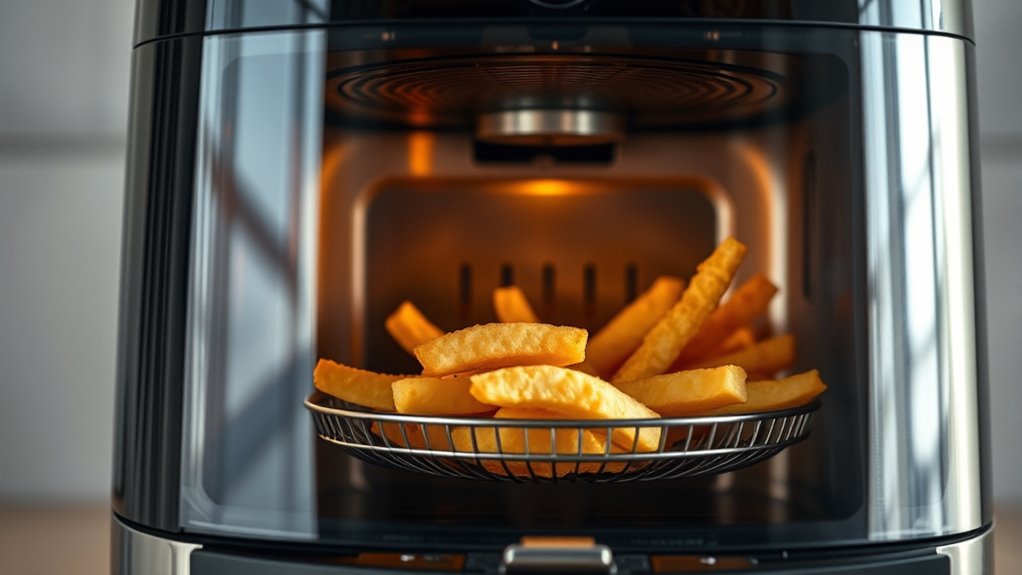

Convection cooking uses a fan to circulate hot air around your food, creating a crispy exterior and cooking it evenly—all with less oil. An air fryer works like a compact convection oven, using powerful airflow and a perforated basket to speed up cooking times and crisp up your food. If you want to learn more about how hot air combines with design features for perfect results, keep exploring this overview.
Key Takeaways
- Convection cooking uses a fan to circulate hot air evenly around food, promoting faster and more uniform cooking.
- Air fryers are compact convection appliances that create crispy textures by rapidly circulating superheated air.
- Proper food placement and spacing ensure effective airflow, leading to consistent browning and crispiness.
- The Maillard reaction occurs at high temperatures (350°F-400°F), enhancing flavor and browning during convection cooking.
- Air fryers cook approximately 20% faster than traditional convection ovens due to their smaller size and intense air circulation.
As an affiliate, we earn on qualifying purchases.
What Is Convection Cooking and How Does It Differ From Traditional Methods
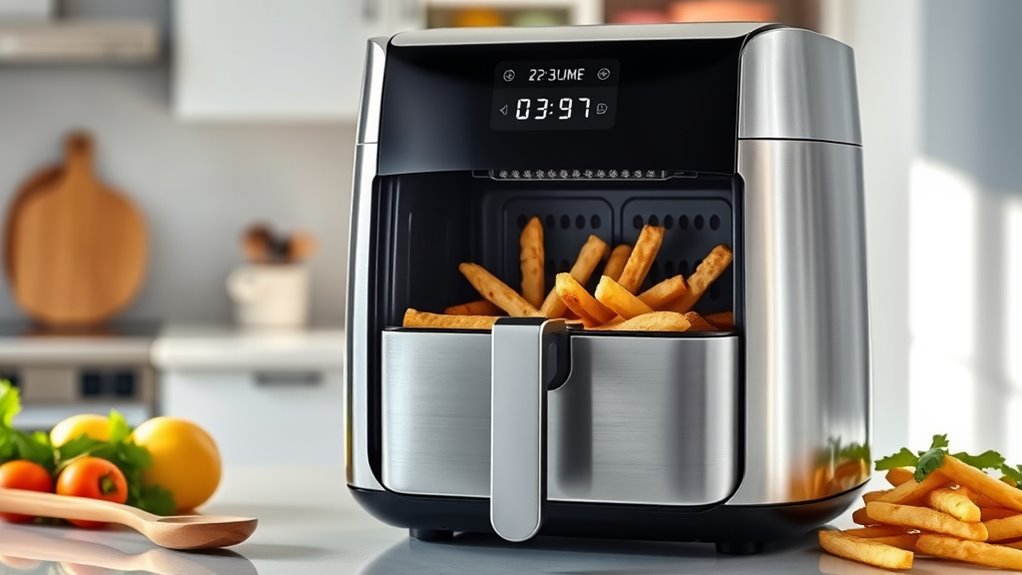
Convection cooking uses a fan to circulate hot air around your food, which helps it cook more evenly and quickly. Unlike traditional ovens that rely mainly on radiant heat, convection ovens and air fryers actively move hot air, creating a steady, uniform temperature. This even heat distribution reduces hot spots and prevents uneven browning or undercooked spots. The circulating hot air also promotes browning and crispiness through the Maillard reaction, similar to frying but with less oil. The fan accelerates heat transfer, resulting in faster cooking times and more consistent results. This method enhances the texture of foods, giving you a crispy exterior without sacrificing moisture inside. Additionally, convection cooking can help reduce cooking times and energy consumption, making it a more efficient method. The rapid circulation of hot air also helps in moisture retention, ensuring your food stays tender and flavorful. Moreover, the airflow pattern within convection appliances is designed to optimize heat distribution for even cooking. Overall, convection cooking delivers efficient, evenly cooked dishes with a desirable crispy texture that’s hard to achieve in traditional ovens.
The Mechanics Behind Air Fryer Functionality
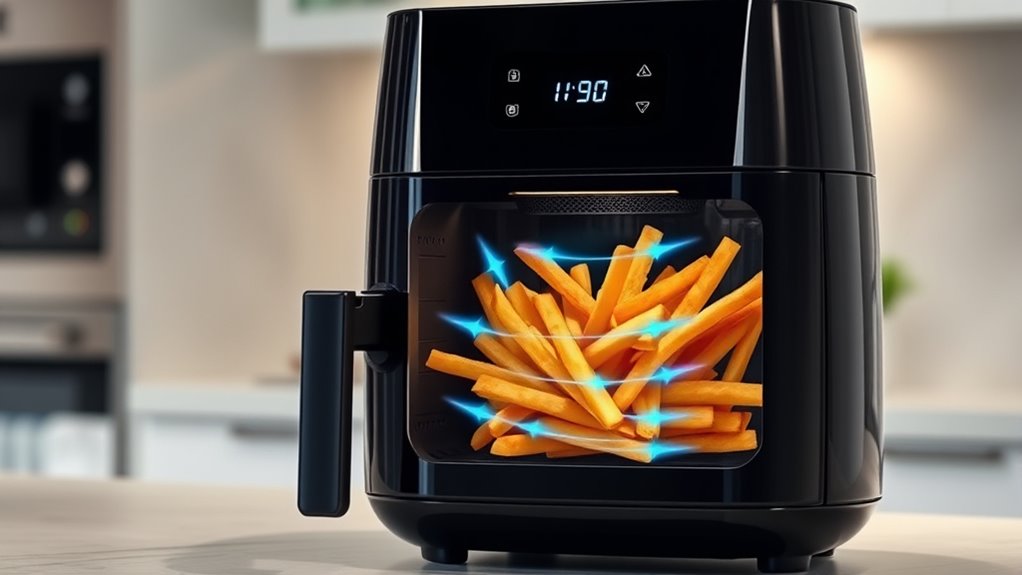
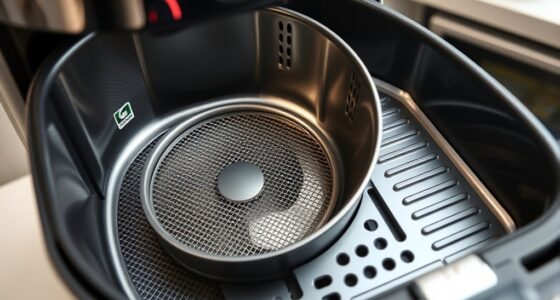
An air fryer functions as a compact convection oven that relies on a high-powered fan to circulate superheated air rapidly around your food. This convection process creates hot air that efficiently surrounds and crisps your food’s exterior. The fan’s rapid circulation ensures even heat distribution, promoting faster cooking times—about 20% quicker than traditional convection ovens. The heating element quickly reaches temperatures between 300°F and 400°F, aiding in browning through the Maillard reaction. The perforated basket design maximizes airflow around your food, enhancing crispiness and even cooking. Additionally, the design leverages efficient heat transfer to optimize cooking performance, making it an effective convection cooking appliance. Proper airflow design is essential in air fryer technology to achieve consistent results and desirable textures. The air circulation process is carefully engineered to mimic the effects of deep frying without the need for excessive oil. Notably, the hot air movement inside the appliance is crucial for achieving that characteristic crispy exterior while maintaining tender interiors.
Key Features of Air Fryers and Convection Ovens
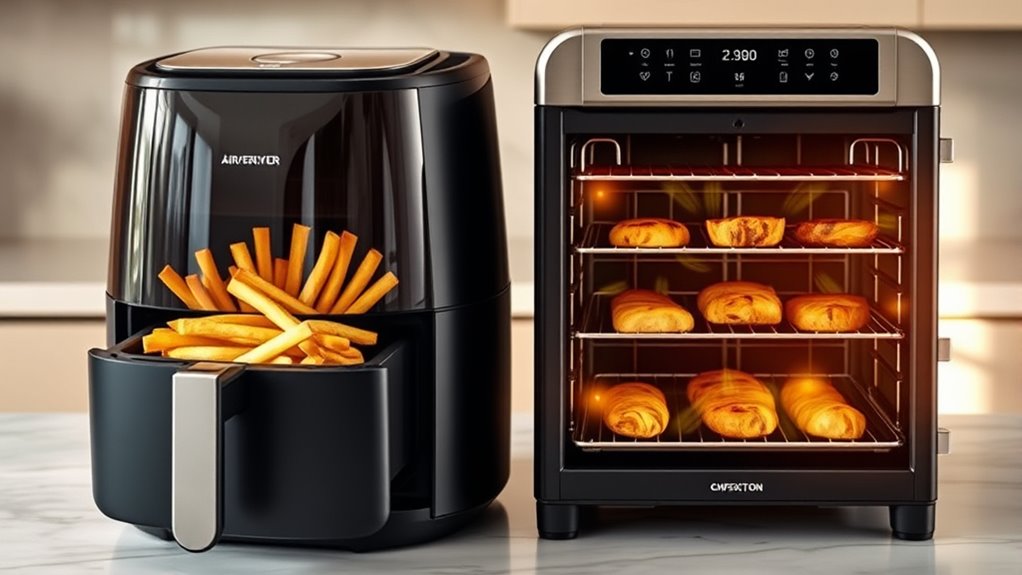
Both air fryers and convection ovens rely on circulating hot air to cook food evenly and achieve desirable textures. Air circulation is key, with hot air rapidly moving around your food to create a crispy exterior, similar to frying but with less oil. Air fryers typically have a compact design with a perforated basket that maximizes airflow, making them ideal for quick, high-temperature cooking. Convection ovens feature larger capacities, multiple heating elements, and adjustable racks, allowing for versatile food prep like baking and roasting. The built-in fan in convection appliances enhances heat transfer, promoting uniform browning. While both use convection technology, air fryers emphasize high-speed air circulation in smaller spaces for fast, fried-like results, whereas convection ovens offer broader cooking options. Additionally, understanding the importance of proper airflow can help optimize cooking performance in both appliances. Moreover, modern convection ovens often incorporate advanced temperature controls to ensure precise cooking.
Comparing Cooking Performance: Air Fryer vs. Convection Oven
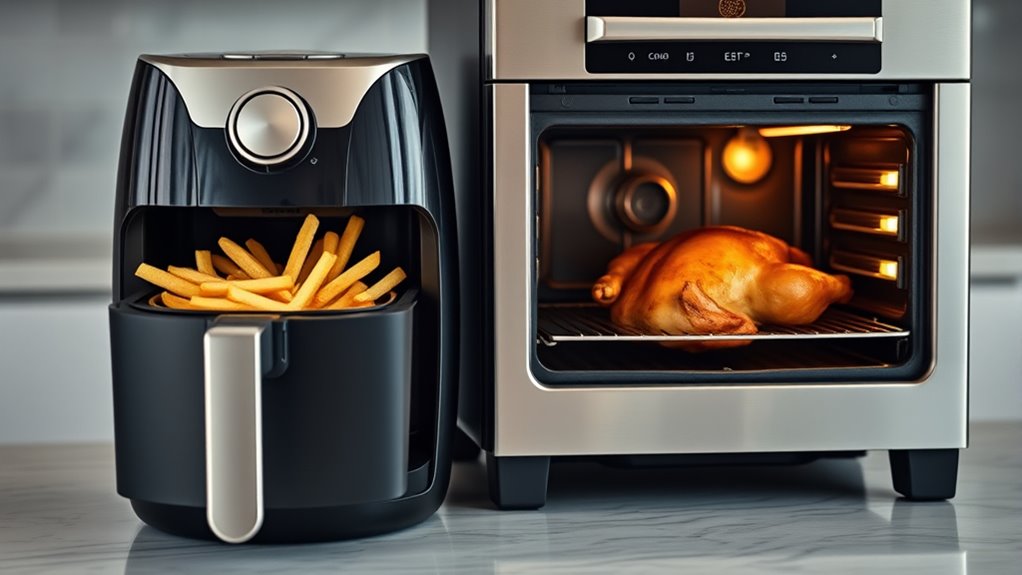
When comparing your air fryer and convection oven, you’ll notice that air fryers cook about 20% faster thanks to their smaller size and intense airflow. While air fryers excel at quick, small-batch cooking with crispy results, convection ovens handle larger quantities more evenly. Understanding these differences helps you choose the right appliance for your cooking needs. Additionally, performance features such as temperature accuracy and airflow distribution can influence the overall cooking experience. The contrast ratio of a convection oven’s heating elements also affects how evenly the heat is distributed across the cooking chamber. Moreover, the airflow dynamics within each appliance significantly impact cooking efficiency and final texture. Incorporating payment processing solutions that are tailored for kitchen appliances can further enhance user experience by enabling quick and secure transactions for appliance purchases and service plans.
Speed and Efficiency
Air fryers outpace convection ovens in speed and efficiency, especially for small to medium batches. Their smaller size and powerful hot air circulation mean you can cook food about 20% faster. The high-speed fan enhances heat transfer, browning, and crisping, making your meals quicker. Plus, air fryers reach target temperatures faster because they heat up and circulate hot air more efficiently. The high-speed fan speeds up the cooking process significantly, reducing overall time. Convection ovens, on the other hand, often need longer preheating and cooking times for similar results. This makes air fryers ideal for quick meals and snacks. Additionally, the exfoliating properties of glycolic acid in skincare can help improve skin texture and brightness, demonstrating how efficient circulation—whether in a kitchen appliance or skin treatment—can lead to better results. Here’s what improves speed and efficiency: 1. Hot air circulates rapidly within the compact chamber. 2. Faster heat transfer accelerates cooking times. 3. Smaller size reduces preheating duration. 4. More efficient hot air flow cooks food evenly and quickly. Moreover, the compact design of air fryers allows for easier placement and less heat loss, further improving their efficiency. Incorporating air circulation technology enhances overall performance and energy savings.
Batch Capacity Differences
Because air fryers are smaller than convection ovens, they naturally excel at cooking smaller batches quickly and efficiently. Their limited capacity, usually 2 to 6 quarts, means you can cook 1-4 servings with ease, making them perfect for quick snacks or small meals. The compact size allows hot air to circulate rapidly around the food, which shortens cooking times compared to larger convection ovens. While convection ovens can handle larger quantities and multiple racks for bigger batches, they require longer preheating and cooking times. AI technology has also contributed to optimizing convection cooking settings for more precise results. Additionally, the focused hot air circulation in air fryers is a key convection principle that enables faster cooking with crispy textures, similar to deep-frying but with less oil. Proper airflow is essential for achieving consistent crispiness and even cooking in both appliances. Moreover, understanding air purification concepts can help maintain a cleaner cooking environment by reducing airborne contaminants.
Tips for Maximizing Results When Using an Air Fryer in a Convection Oven
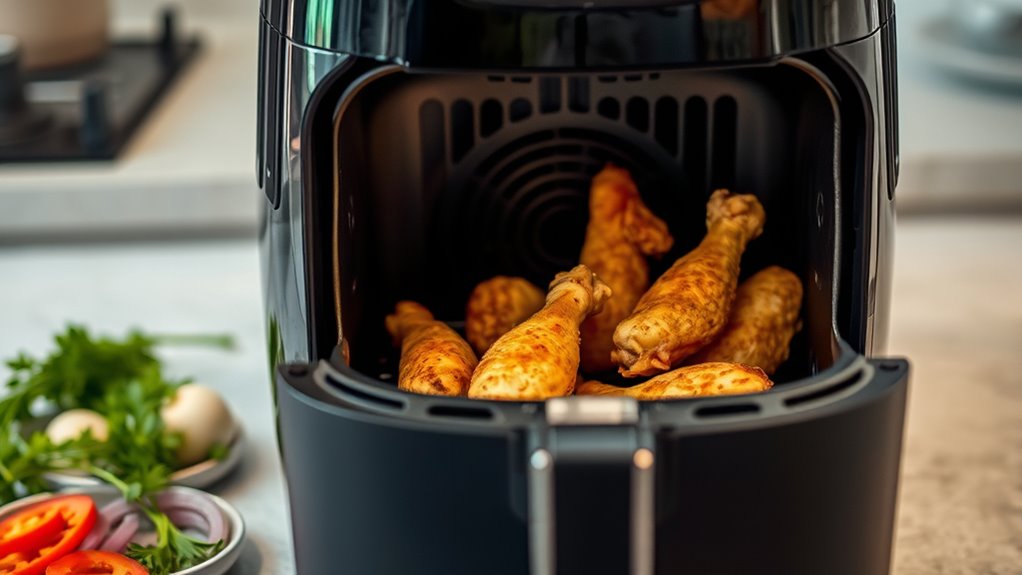
To get the best results, start by properly placing your food with space around each item to guarantee good airflow. Set your convection oven to the right temperature, preheating if needed, to promote even cooking. Adjust the temperature as necessary and monitor your food for consistent crispness and doneness. For optimal performance, consider tuning your appliance to better match your cooking needs and enhance efficiency. Additionally, referring to best practices for convection ovens can help you achieve more precise and consistent cooking outcomes. Remember to use proper air circulation techniques to ensure your food cooks evenly and crisps up nicely.
Proper Food Placement
For ideal results, make sure to arrange your food in a single, even layer with space between pieces. Proper food placement guarantees effective air circulation and uniform cooking. Use perforated baskets or racks to maximize airflow around each item and avoid overcrowding, which can block hot air and cause uneven browning. Place smaller or thinner foods closer to the heating element or fan for crispier results. Keep in mind, overfilling the basket reduces airflow, leading to longer cook times and less crispy outcomes. Remember to turn or shake your food halfway through to promote even exposure to hot air and prevent sticking or burning. By paying attention to food placement, you can optimize convection cooking and achieve consistently tasty, crispy results.
Optimal Temperature Settings
Optimizing temperature settings is essential for achieving perfect results in your air fryer or convection oven. Preheating ensures even heat distribution, leading to consistent cooking and crispiness. Typically, setting the temperature between 350°F and 400°F balances browning and prevents burning. For thicker or denser foods, increase the temperature by 10-20°F to avoid undercooking edges while ensuring thorough cooking. Using higher settings around 400°F promotes Maillard reaction browning and crispiness, especially for proteins. Fine-tuning these settings based on your specific model and food type maximizes crispiness and prevents over-browning. Here’s a quick guide to temperature adjustments:
| Food Type | Recommended Temp | Purpose |
|---|---|---|
| Vegetables | 375°F | Even heat for tender and crisp |
| Chicken | 400°F | Crispy skin, thorough cooking |
| Baked Goods | 350°F | Gentle heat to avoid burning |
Popular Recipes Perfect for Air Frying in a Convection Oven

Using an air fryer in your convection oven opens up a world of quick, delicious recipes that require minimal effort. With hot air circulating rapidly, you can create crispy, restaurant-quality fried foods at home. Here are some popular recipes perfect for air frying:
Discover quick, crispy, restaurant-quality fried foods at home with your convection oven’s air fryer function.
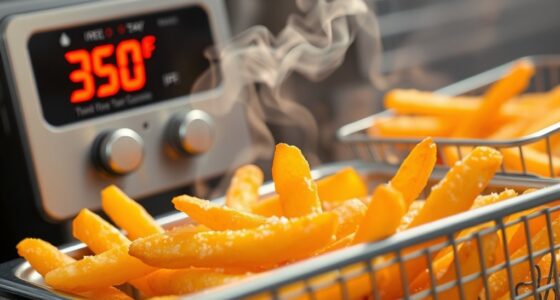
- Crispy French fries – slice potatoes evenly, toss with a little oil, and cook at 400°F for about 20 minutes, shaking halfway.
- Salmon fillets – sear the exterior and keep the inside tender by air frying at 375°F for 10-12 minutes.
- Vegetables like broccoli or cauliflower – roast for 12-15 minutes at 400°F, with seasoning and a light oil coating.
- Breaded chicken wings – achieve a golden, crispy crust in 25-30 minutes at 375°F, flipping or shaking for even browning.
Safety and Maintenance Tips for Air Fryers and Convection Ovens
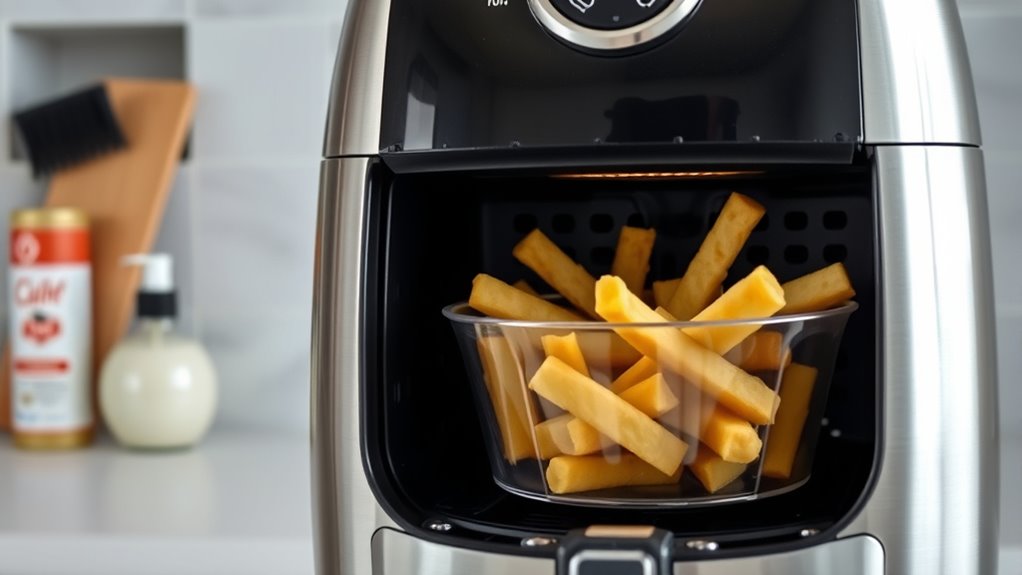
Ensuring safety and proper maintenance is essential when operating your air fryer or convection oven. Always unplug the appliance after use to prevent electrical hazards and allow hot components to cool. Regularly clean the basket, tray, and exterior with non-abrasive, hot, soapy water to prevent buildup, which can hinder air circulation and performance. Use oven mitts or heat-resistant gloves when handling hot parts to avoid burns. Place your appliance on a stable, heat-resistant surface, away from water and flammable items. Follow the manufacturer’s safety guidelines, avoiding overfilling and blocking air vents to prevent overheating and guarantee proper airflow. These practices help prevent hazards, keep your appliance functioning efficiently, and extend its lifespan.
Choosing the Right Appliance for Your Kitchen Needs
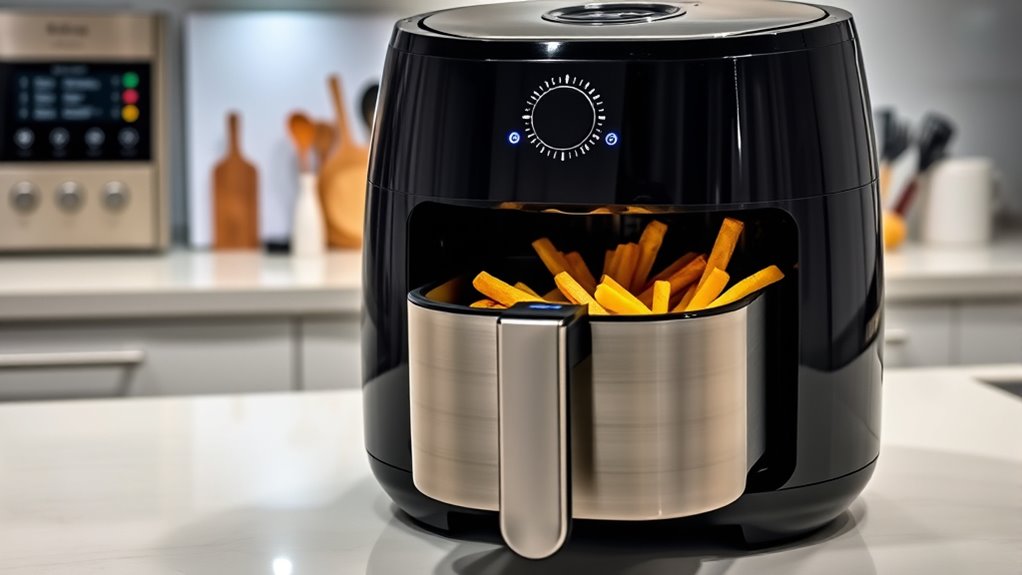
Choosing the right appliance for your kitchen depends on your cooking habits and available space. To find the best fit, consider these factors:
Selecting the ideal appliance hinges on your cooking style and available space.
- Air fryer models and capacity—small (2-4 quarts) for singles or small families; larger (6-16 quarts) for bigger households or meal prep.
- Features and cooking process—look for preset modes, digital controls, and additional options like baking or roasting.
- Air circulation and trays—perforated baskets boost crispiness; solid trays suit larger or delicate foods.
- Budget and space—prices range from $50 to over $300; ensure it fits your countertop or built-in space and has safety features like automatic shutoff.
Matching these aspects guarantees your appliance meets your needs and enhances your cooking experience.
Enhancing Your Cooking With the Science of Hot Air Circulation
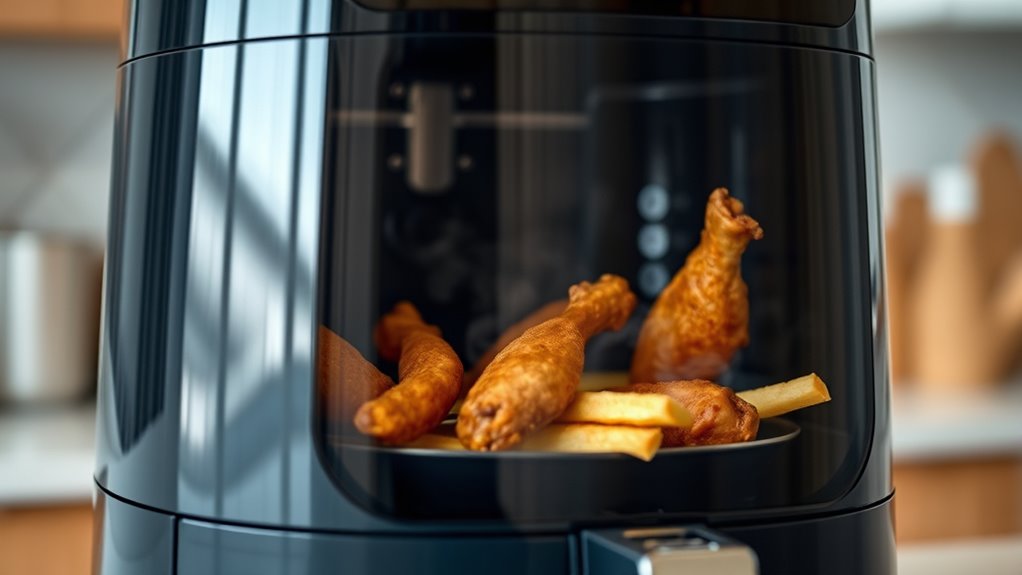
Hot air circulation is the key behind the efficiency and even results of convection cooking and air frying. By using a fan to evenly distribute heated air, your food cooks uniformly, reducing hot spots. This movement of hot air creates a consistent temperature gradient, promoting even browning and crispiness. The high speed—often over 15 miles per hour—improves heat transfer, speeding up cooking times. This process relies on the Maillard reaction, which browns food quickly at high temperatures. Precise control of airflow and temperature ensures your air fryer produces perfectly cooked, evenly browned, and crispy results every time.
| Benefit | Effect |
|---|---|
| Hot air circulation | Promotes even browning and crispiness |
| High temperature | Accelerates Maillard reaction for flavor |
| Consistent heat | Ensures uniform cooking throughout the food |
Frequently Asked Questions
How Does Convection Work in an Air Fryer?
Convection in an air fryer works by using a powerful fan that rapidly circulates hot air around your food. This high-speed airflow increases the surface temperature, helping food brown and crisp evenly without extra oil. The small chamber and precise temperature controls guarantee quick, consistent cooking. As a result, you get crispy, evenly cooked dishes in less time, making your cooking faster and healthier.
Why Are People Ditching Their Air Fryers?
You might be ditching your air fryer because it feels like trying to cook a feast in a tiny box. Its limited capacity makes batch cooking a nightmare, and the non-stick baskets can get scratched easily. Plus, greasy foods often cause smoke or odors if you don’t clean it well. With more versatile convection ovens now affordable, you can cook bigger meals and enjoy better results all in one device.
What Should Not Be Cooked in a Convection Oven?
You shouldn’t cook foods with wet batters, like tempura or beer-battered items, in a convection oven because the batter can drip through vents and cause messes or uneven cooking. Delicate baked goods like soufflés may not rise properly due to the intense airflow. Also, avoid large, whole meats that need slow cooking, as they can cook unevenly. Never use plastics or non-oven-safe containers, as they can melt or release fumes.
Can You Put Foil in an Air Fryer Convection Oven?
You can put foil in an air fryer convection oven, but you need to be careful. Make sure it doesn’t block airflow or touch the heating element or fan. Perforate or poke holes in the foil to let hot air circulate properly. Always check your appliance’s manual because some models advise against using foil to prevent uneven cooking, fire hazards, or damage. Safety first for crispy, delicious results!
Conclusion
Understanding how convection cooking works turns your kitchen into a symphony of hot air, transforming simple ingredients into culinary masterpieces. Whether you choose an air fryer or a convection oven, mastering their mechanics lets you cook smarter, not harder. Think of these appliances as your trusty kitchen orchestra—each note of hot air playing in harmony. Embrace the science, and watch your cooking skills rise to new heights with ease and finesse.