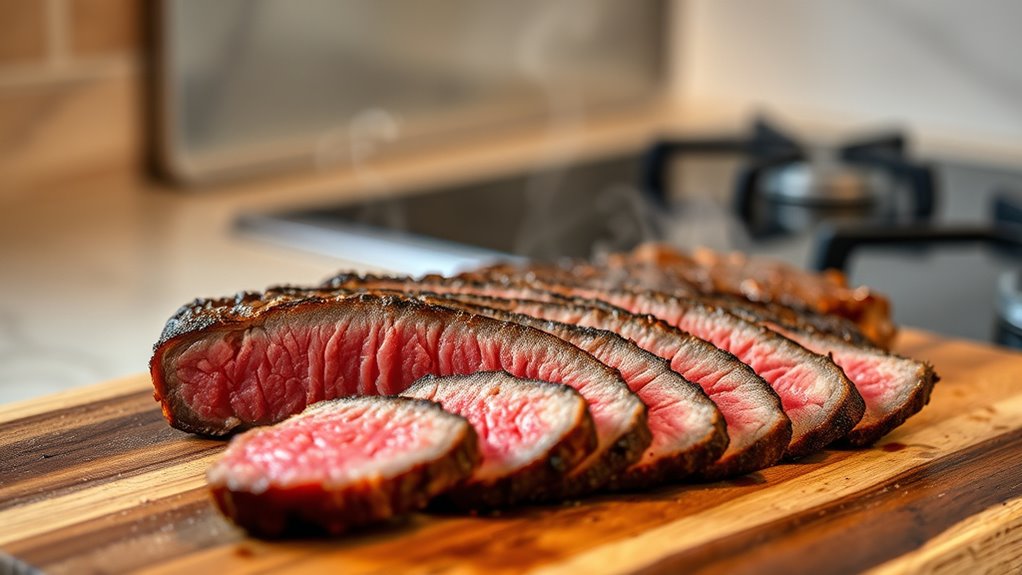

To reheat steak without overcooking, use gentle methods like the sous vide technique, which evenly restores warmth while keeping it tender and juicy. If you prefer the microwave, slice the steak thin, cover it, and reheat on medium-low in short intervals, flipping occasionally. Rest the steak briefly afterward to redistribute juices. By controlling heat and temperature carefully, you can enjoy your steak almost as freshly cooked. Want to learn more? Keep exploring for detailed tips.
Key Takeaways
- Reheat steak slowly using sous vide at around 130°F to evenly warm without overcooking.
- Slice steak into thinner pieces for quicker, more controlled reheating in the microwave.
- Cover with a damp paper towel and reheat in short intervals on low or medium power.
- Let the steak rest briefly after reheating to redistribute juices and maintain tenderness.
- Avoid multiple reheating cycles; reheat only what you need to prevent dryness.
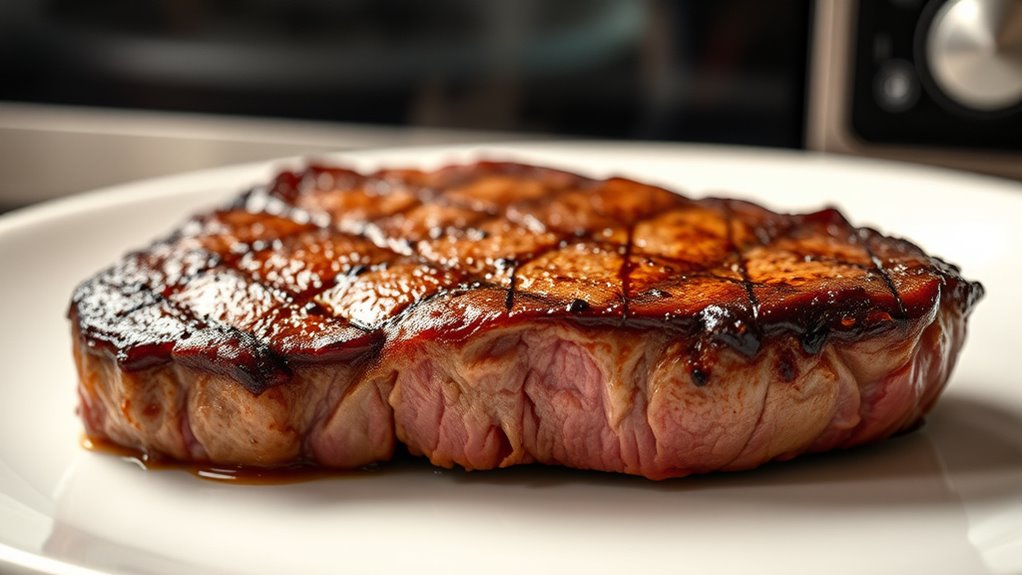
Reheating steak can be tricky because you want to preserve its flavor and tenderness without overcooking it. If done improperly, you risk drying out the meat or turning it tough. Luckily, there are effective methods to reheat steak gently and evenly. One excellent approach is sous vide reheating. With this technique, you place your steak in a vacuum-sealed bag and immerse it in a water bath set to a temperature just below or at your steak’s original doneness—say around 130°F for medium-rare. This method heats the meat uniformly, ensuring it stays tender and juicy without overcooking. It’s particularly useful if you want to reheat a steak without losing its texture or flavor. The process takes about 30 to 45 minutes, depending on the thickness of your cut, but it’s worth the wait for perfectly reheated steak every time.
If you’re short on time, the microwave can be a quick solution, but it requires care to avoid turning your steak rubbery. Here are some microwave tips: first, slice the steak into thinner pieces, which helps heat it more evenly. Place the slices on a microwave-safe plate and cover them with a damp paper towel. This prevents moisture loss and keeps the meat tender. Use medium or low power settings—microwaving on high can easily overcook the exterior while leaving the center cold or overdone. Reheat in short intervals, about 20-30 seconds at a time, flipping or stirring the pieces between sessions. Check frequently to gauge doneness and prevent overheating. Rest the steak briefly after reheating; this allows the juices to redistribute, maintaining moistness and flavor. Additionally, proper temperature control can help prevent overcooking during reheating.
Another tip is to avoid reheating steak multiple times, as each cycle increases the risk of dryness and flavor loss. Instead, reheat only what you plan to serve immediately. For added flavor, you can brush the steak with a little broth or butter before reheating, which helps keep it moist. Whichever method you choose, aim for gentle, controlled heat to preserve the steak’s original qualities. Both sous vide reheating and the right microwave tips can help you enjoy your leftover steak almost as good as when it was freshly cooked. With a bit of patience and attention to detail, you’ll avoid overcooking and enjoy tender, flavorful reheated steak every time.
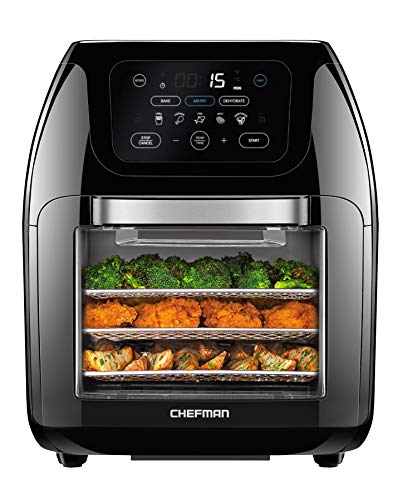
CHEFMAN Multifunctional Digital Air Fryer+ Rotisserie, Dehydrator, Convection Oven, 17 Touch Screen Presets Fry, Roast, Dehydrate, Bake, XL 10L Family Size, Auto Shutoff, Large Easy-View Window, Black
Versatile countertop cooking: Air fry, bake, dehydrate, rotisserie, or roast to crispy perfection in one convenient appliance
As an affiliate, we earn on qualifying purchases.
Frequently Asked Questions
Can I Reheat Steak Using a Microwave Without Losing Flavor?
Yes, you can reheat steak in a microwave without losing flavor if you use the right reheating techniques. To preserve microwave flavor and keep your steak juicy, slice it into smaller pieces and cover it with a damp paper towel. Use low power settings and reheat in short intervals. This gentle method prevents overcooking and maintains the steak’s tenderness and flavor, giving you a delicious result every time.
What’s the Best Way to Reheat Steak for Leftovers?
You want to keep your leftover steak juicy while preserving flavor and texture. The best way is to reheat it gently in an oven or on the stovetop, using low heat and a covered pan. Avoid the microwave, which can turn your steak rubbery. Rest your steak after reheating for even warmth, and slice it thinly if needed. This way, you get tender, flavorful leftovers every time.
How Long Should I Reheat Steak to Avoid Overcooking?
You should reheat steak for about 1-2 minutes per side, depending on thickness, using gentle heat to maintain perfect temperature control. To avoid overcooking, use reheating techniques like a skillet on low heat or the oven at 250°F, and check frequently. Keep an internal temperature of around 125°F to 130°F for medium-rare or 140°F for medium, ensuring your steak stays tender and juicy.
Is It Safe to Reheat Steak Multiple Times?
Reheating steak multiple times is like playing with fire—it’s risky and can lead to food safety issues. You should only reheat once, following proper reheating guidelines, to prevent bacteria growth. Each time you reheat, the risk of foodborne illness increases, and the quality diminishes. To stay safe, store leftovers promptly, reheat thoroughly, and avoid repeated reheating to keep your steak safe and delicious.
Can I Reheat Steak From Frozen Directly?
Yes, you can reheat frozen steak directly using various reheating methods. Start by thawing it slightly in the microwave or oven if possible, but you can reheat it straight from frozen with techniques like sous vide, skillet, or oven reheating. Keep the heat low and steady to avoid overcooking. Use a meat thermometer to guarantee it reaches a safe internal temperature without losing moisture and flavor.

Emeril Lagasse Extra Large French Door Air Fryer Toaster Oven Combo, 24 Cooking Functions and Digital Controls, 7 Accessories Included, Stainless Steel Finish, 26QT Capacity
A VERSATILE AIR FRYER AND MULTI-COOKER COMBO: Elevates practically any meal, from air frying quick after-school snacks to...
As an affiliate, we earn on qualifying purchases.
Conclusion
Remember, patience is a virtue when reheating steak. By choosing gentle methods and monitoring closely, you can enjoy your leftovers without sacrificing flavor or tenderness. Whether you opt for the oven, skillet, or microwave, take your time and avoid rushing the process. As the saying goes, “Haste makes waste.” With a little care, you’ll savor every bite just as if it were freshly cooked.

Ninja Air Fryer with Air Crisp | 5 QT Capacity fits up to 4lbs of Fries | 4-in-1 Pro Air Fry, Roast, Reheat, Dehydrate | 400°F Max Temp | 1750 Watts | W/Nonstick Basket & Crisper Plate | Grey | AF141
AIR CRISP TECHNOLOGY: 400℉ superheated air surrounds food for hot, crispy results with little to no oil.
As an affiliate, we earn on qualifying purchases.

Cosori 9-in-1 TurboBlaze Air Fryer 6 Qt, Premium Ceramic Coating, 90°–450°F, Precise Heating for Even Results, Air Fry, Roast, Bake, Broil, Dry, Frozen, Proof, Reheat, Keep Warm, 120V, Dark Gray
𝘼𝙞𝙧 𝙁𝙧𝙮𝙚𝙧 𝙐𝙥𝙜𝙧𝙖𝙙𝙚: Innovative TurboBlaze Technology delivers a powerful 3600 rpm fan speed and temperatures up to 450℉,...
As an affiliate, we earn on qualifying purchases.